
Key Takeaways
- Trust earns attention by giving customers a reason to believe your brand before they buy.
- Content should function as long-term infrastructure that guides customers throughout a non-linear buying journey.
- First-party and proprietary data create a competitive advantage AI can’t easily replicate.
- Brand and performance marketing work best as a single growth system—not separate disciplines.
- AI delivers the most value when it automates repetitive work, allowing marketers to focus on strategy, creativity, and customer understanding.
Why Trust Matters More Than Visibility in the Age of AI
Marketers have never had more ways to publish content. They’ve also never faced more competition for attention.
AI-generated search results, changing search behavior, and an endless stream of new content have made visibility harder to earn. According to Ben Carter, Chief Customer Marketing & Media Officer at Carwow, the brands that succeed won’t simply produce more content. They’ll become the most trusted source of information in their category.
During an Activate London session with Iterable CMO Priya Gill, Carter shared how Carwow has built one of the automotive industry’s strongest media brands by investing in trust, proprietary data, and content that genuinely helps customers make better decisions. Those same principles are becoming even more important as AI changes how consumers discover brands and evaluate information.
Editor’s note: Watch the full Activate London session on demand.
Why Trust Is the Only Sustainable Competitive Advantage
Attention is often treated as the goal of marketing. Carwow approaches it differently. Trust comes first. Attention follows. That philosophy shapes how the company creates content, works with advertising partners, and supports customers throughout the car-buying journey.
For Carwow, trust starts with impartiality.
The company’s YouTube channel reaches more than 11 million subscribers, but its value doesn’t come from scale alone.
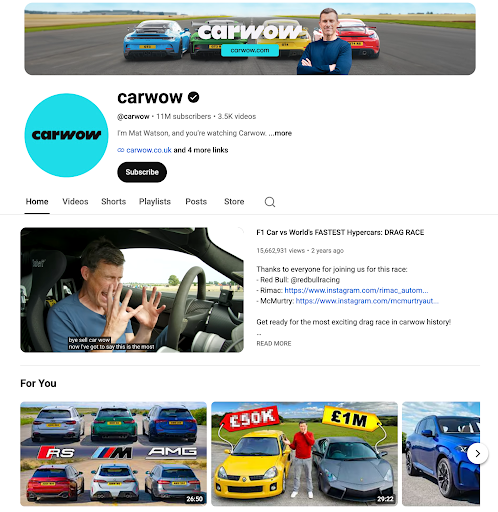
It comes from credibility. Reviewers are encouraged to give honest opinions—even when the manufacturer being reviewed is also an advertising partner. Protecting that editorial independence helps customers trust the information they’re receiving.
Carwow reinforces that credibility with proprietary customer research.
Its Driver Power survey collects detailed feedback from people who have recently purchased a vehicle, creating a growing library of real-world experiences that helps shoppers compare makes and models with greater confidence. Those insights aren’t generated by AI or pulled from public sources. They come directly from customers.
Trust also reflects the emotional reality of the purchase. Buying a car is rarely a quick or linear decision. Customers compare options, revisit choices, and often change direction as budgets and priorities evolve. Rather than pushing people toward a sale, Carwow focuses on helping them make an informed decision at every stage of that journey.
That approach creates value beyond the customer experience. As AI-powered search increasingly prioritizes authoritative sources, brands with a reputation for accurate, useful, and independent information are more likely to be surfaced when customers ask for recommendations. Trust becomes an asset that improves discoverability as well as brand loyalty.
Takeaway: Trust isn’t the outcome of effective marketing—it’s the foundation that makes every other marketing investment work harder. Brands that consistently help customers make better decisions earn attention, loyalty, and long-term authority.
Content Is No Longer a Channel. It’s the Product.
Many brands create content to support marketing. Carwow built marketing around content.
Today, roughly 50% of the company’s traffic comes from organic content, anchored by its Youtube channel. That audience extends far beyond people actively shopping for a car. Many viewers simply enjoy the reviews, comparisons, and entertainment.
That distinction matters. Most buying journeys don’t begin with purchase intent. They begin with curiosity.
By consistently publishing content people choose to watch, Carwow builds relationships long before customers enter the market. When they are ready to buy or sell a vehicle, the brand is already familiar.
As Carter explained, every piece of content functions as a virtual signpost—meeting customers where they’re already searching instead of relying solely on traditional advertising.
That strategy includes multiple content formats designed for different moments in the journey:
- Video reviews that educate and entertain.
- Editorial articles that answer detailed research questions.
- Short-form summaries that make information easier for AI search engines and customers to understand.
- Proprietary pricing and comparison tools that help shoppers make informed decisions.
Each format serves a different purpose, but they all reinforce the same outcome: helping customers make better decisions.
Takeaway: The strongest content strategies don’t interrupt the customer journey. They become part of it.
Why Proprietary Data Matters More Than Ever
As AI makes it easier to generate content, original information becomes increasingly valuable. Carwow’s advantage isn’t simply producing more articles or videos. It’s owning data that AI models can’t create on their own.
Every interaction on the platform happens through a logged-in experience, giving the company rich first-party data about customer interests and buying intent. That foundation is strengthened by proprietary datasets, including pricing information and vehicle valuations that reflect real market activity. Last year alone, Carwow valued 3.5 million vehicles in the UK.
Those insights help the business in several ways:
- Understand customer intent across a buying journey that typically spans about three months.
- Deliver more relevant marketing based on first-party behavioral signals.
- Create unique information that strengthens Carwow’s authority in search and AI-driven discovery.
Carter also acknowledged that search is changing.
AI-generated answers will likely reduce overall clicks, but the traffic that does reach a brand should be more informed and more intentional. Rather than chasing every impression, marketers should focus on becoming the source AI systems trust enough to reference.
That shifts the goal of content marketing. Success isn’t measured by publishing the most content. It’s measured by creating information that competitors can’t replicate, and customers continue to trust.
Takeaway: Proprietary data creates durable brand authority. The more unique and trustworthy your information becomes, the more valuable it is to customers, search engines, and AI systems alike.
Brand and Performance Work Better Together
One of Carter’s strongest opinions had nothing to do with AI. It was about marketing structure.
Too many organizations still separate brand and performance into different teams with different goals. Carter believes that distinction no longer reflects how customers experience a brand. Customers don’t think in channels.
They discover a brand through content, research it through search, engage through CRM, and convert when they’re ready. Every interaction shapes the same relationship. For Carwow, content is what makes that system work.
Educational videos build awareness. First-party data helps personalize future interactions. CRM keeps customers engaged throughout a car-buying journey that often stretches over three months. Performance marketing captures remaining demand when customers are ready to act.
Rather than operating independently, each discipline strengthens the next. That philosophy also changes how marketers should think about success.
As Carter put it, a brand should be a performance accelerator, not a separate objective. Strong brands lower acquisition costs, improve engagement, and create the trust that makes every marketing channel more effective. The same thinking applies inside marketing teams.
Carter encourages marketers to become what he calls “three-dimensional marketers.” Instead of focusing on a single channel, they look for opportunities to extend campaigns across functions, respond to changing customer behavior, and improve performance over time.
That mindset includes:
- Looking beyond individual channels to the complete customer journey.
- Reusing successful campaigns across multiple touchpoints.
- Adapting creative based on customer behavior and market conditions.
- Working across teams instead of optimizing in silos.
As AI automates more routine work, those cross-functional skills become even more valuable. The greatest impact won’t come from mastering a single platform—it will come from understanding how every channel contributes to a stronger customer experience.
Takeaway: Customers experience one brand, not separate marketing channels. The organizations that grow fastest align brand, performance, content, and CRM around the same customer journey.
AI Should Eliminate Busywork, Not Curiosity
Carter sees AI as a productivity tool first. The biggest opportunity isn’t asking AI to replace marketers. It’s using it to remove repetitive work so marketers can spend more time thinking strategically.
At Carwow, that starts with identifying routine tasks that happen every day or every week, then asking whether AI can handle them more efficiently.
Some key examples include:
- Building audience segments.
- Moving audiences between advertising platforms.
- Resolving common customer service questions.
- Automating repetitive campaign workflows.
Freeing marketers from those tasks creates more time for work AI can’t replicate:
- Asking better questions.
- Challenging assumptions.
- Understanding customers.
- Developing creative ideas.
- Making strategic decisions.
Carter encourages his team to begin experimenting with AI in their personal lives as well as at work. Building familiarity through everyday use helps marketers understand where AI adds value and where human judgment remains essential.
His advice is simple: automate the routine so people can focus on the work that requires creativity, context, and critical thinking.
Takeaway: AI delivers its greatest value when it removes repetitive work and gives marketers more time to think, create, and build stronger customer relationships.
Brand Authority Wins in Every Channel, Including AI
The way people discover brands is changing.
Search is becoming more conversational. AI is summarizing information before customers ever click a link. New channels continue to emerge, while traditional ones become increasingly crowded. Carwow’s response hasn’t been to chase every new platform or publishing trend.
Instead, the company has doubled down on the principles that have always built strong brands: create genuinely useful content, earn customer trust, invest in proprietary insights, and help people make better decisions. Those assets make every marketing channel—from search and social to CRM and AI discovery—more effective.
AI will continue changing how marketers work, but Carter’s advice remains remarkably consistent. Use technology to eliminate repetitive tasks, protect time for strategic thinking, and never lose sight of the customer. The brands that stand out won’t be the ones producing the most content. They’ll be the ones creating the most trusted content.
Editor’s note: Watch Ben Carter’s full Activate London session on demand to learn more about Carwow’s approach to building brand authority in an AI-first world.
Frequently Asked Questions (FAQs)
Why is brand authority becoming more important in the age of AI?
AI-powered search engines increasingly prioritize trusted, authoritative sources when generating answers. Brands that consistently publish accurate, useful, and original content are better positioned to remain visible as search behavior evolves.
How does first-party data strengthen a marketing strategy?
First-party data helps marketers better understand customer intent, personalize communications, and create experiences based on real behavior. It also provides proprietary insights that competitors and AI models can’t easily replicate.
Why should brand and performance marketing work together?
Customers don’t experience marketing in separate channels. Brand builds trust and awareness, while performance captures demand. Aligning both functions creates a more consistent customer experience and improves overall marketing effectiveness.
How should marketers use AI without losing creativity?
AI is most effective when it automates repetitive work such as audience creation, workflow management, and routine tasks. That gives marketers more time to focus on strategy, customer understanding, and creative problem-solving.
What can marketers learn from Carwow’s content strategy?
Carwow treats content as a long-term business asset rather than a campaign tactic. By combining educational content, editorial independence, and proprietary customer data, the company builds trust long before customers are ready to make a purchase.