
Key Takeaways
- Omnichannel CRM is about choosing the right channel for each customer moment.
- Before expanding your channel mix, identify the lifecycle problem you’re trying to solve.
- Quick wins build momentum, proving ROI and earning stakeholder support for future investments.
- Shared infrastructure can dramatically reduce the effort required to launch new channels.
- A stronger channel mix improves customer reach today while enabling more advanced AI capabilities tomorrow.
Email Isn’t Dead, But It Isn’t Enough
For over two decades, marketers have sounded the alarm on email’s demise. They’ve been wrong every time. Email isn’t dying — but treating it as your only channel might be killing your results.
Customer expectations have changed. People now interact with brands across email, push notifications, in-app experiences, SMS, and other touchpoints. Relying on a single channel makes it harder to reach customers at the right moment. After all, it’s impossible to meet every customer where they already are.
During her Activate Summit session, Rachel Kamel, Director of CRM at Zwift, shared how her team approached that challenge. Rather than trying to launch every channel at once, Zwift built a practical framework for expanding its CRM program one step at a time. The result was broader customer reach, faster campaign execution, and a more efficient operation, all with a smaller team.
Editor’s note: Embed the on-demand session link here.
Whether you’re managing email today or building toward a true omnichannel strategy, Zwift’s approach offers a practical roadmap for choosing the right next step.
Why Channel Mix Is the Multiplier, Not the Strategy
Adding more marketing channels doesn’t automatically create better customer experiences.
As Kamel explained, the goal hasn’t changed. Marketers are still trying to deliver the right message to the right person at the right time. An omnichannel strategy simply gives teams more opportunities to accomplish that by making customers easier to reach, communications more timely, and experiences more relevant.
The key is making sure every channel serves a distinct purpose.
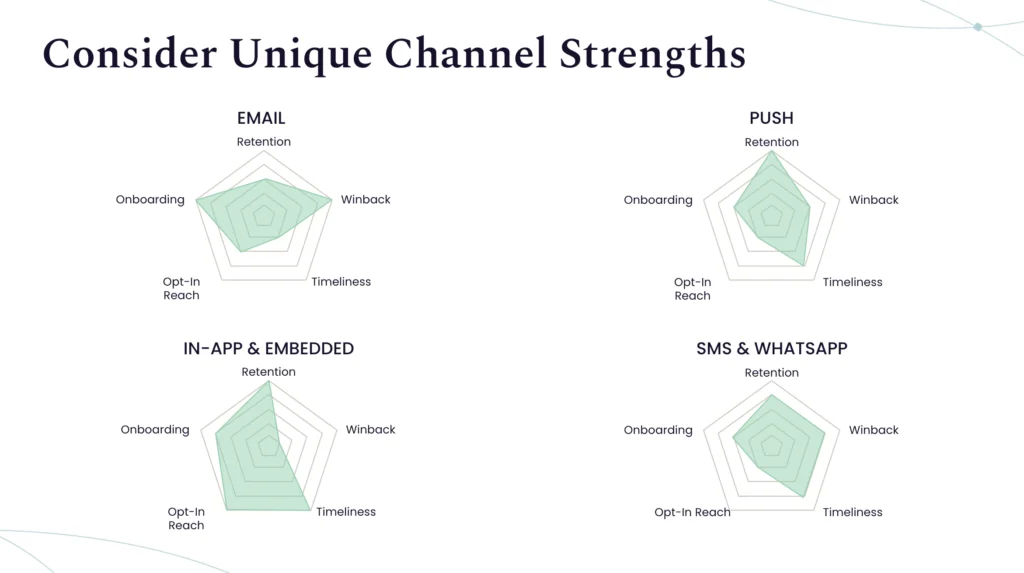
Instead of repeating the same message everywhere, each channel should contribute something unique:
- Email: Drive customers to web experiences, like Zwift’s ecommerce store.
- Push notifications: Deliver timely updates, such as ambassador ride announcements that require quick action.
- In-app messaging: Guide customers through onboarding and other lifecycle moments while they’re already using the product.
- Embedded messaging: Reach customers directly inside the product experience when other channels aren’t available.
That approach also changes how campaigns are designed.
Rather than restarting the conversation in every channel, marketers can build sequential experiences where each touchpoint adds context and helps customers take the next step. A push notification might remind someone about an upcoming event, while an in-app message helps them complete onboarding once they open the app. Each interaction builds on the last instead of competing with it.
For Zwift, channel selection was always driven by customer behavior.
Email remained the best fit for ecommerce because purchases happened on the web. Push notifications became the preferred channel for ambassador rides because they could be created quickly and deep-link users directly into the Companion app. In-app messaging proved most effective for onboarding, helping new users complete high-value actions at the exact moment they were most relevant.
The lesson is simple: omnichannel doesn’t replace good lifecycle marketing. It amplifies it by giving marketers more ways to deliver the right experience at the right moment.
Takeaway: Every new channel should solve a customer problem that your existing channels can’t. When each touchpoint has a clear purpose, omnichannel becomes a force multiplier rather than another source of complexity.
The Channel Expansion Trap: More Isn’t Always Better
Adding channels creates new opportunities. It also creates new problems.
As Rachel Kamel explained, every additional channel introduces new considerations around message fatigue, attribution, operational complexity, and data management. The goal is ultimately to create experiences they’ll actually value.
That’s why Zwift approached omnichannel as a prioritization exercise rather than a technology rollout. Instead of asking, “What channel should we launch next?” the team asked a different question:
“What customer problem are we trying to solve?”
That mindset helped Zwift expand its CRM program without creating unnecessary complexity. One example was customer reach.
Less than half of Zwift’s active users had opted into email marketing. Even after adding the Companion app, roughly 22% of active users remained unreachable through any promotional channel. Those gaps helped determine which channels would deliver the greatest value next.
The lesson is straightforward. Adding channels should remove friction from the customer experience, not create more noise.
Takeaway: More channels don’t automatically create better marketing. Start with the customer problem, then choose the channel that solves it most effectively.
A Practical Framework for Prioritizing Your Next Lifecycle Channel
Most CRM teams don’t have the resources to launch every channel at once.
Kamel recommends evaluating new channels through three practical questions before making the investment.
1. What Problem Are You Actually Trying to Solve?
Start by auditing your lifecycle program.
- Are customers difficult to reach?
- Do you have low opt-in rates?
- Are you struggling with onboarding, retention, or timely communications?
The answers should determine your next channel, not industry trends.
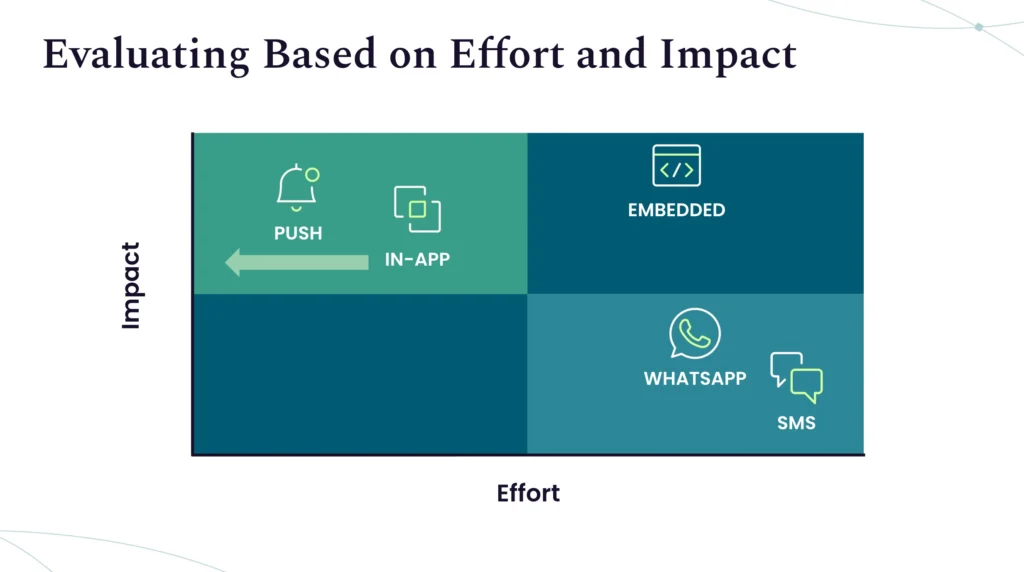
Zwift considered SMS early in its omnichannel journey. But because the company wasn’t collecting phone numbers, supporting SMS would have required major changes to account creation and data infrastructure. Push notifications and in-app messaging addressed the same customer challenges with far less effort.
2. What’s the Effort-vs.-Impact Tradeoff?
Not every high-impact project should come first. Sometimes the fastest win creates the momentum needed for larger initiatives later.
Zwift mapped potential channels against both implementation effort and expected business impact. Push notifications became the first priority because they required relatively little development work. Once the required SDK was in place, launching in-app messaging became much faster because it shared the same infrastructure.
That sequence allowed the team to deliver value quickly while building toward more complex capabilities.
3. Do You Have the Infrastructure to Support It?
Every new channel depends on the right foundation.
Before adding another touchpoint, ask questions like:
- Do we already collect the customer data this channel requires?
- Can we support opt-in and consent appropriately?
- Does this channel build on systems we’ve already implemented?
- Will it improve customer reach or simply duplicate existing communications?
For Zwift, those questions helped eliminate channels that looked attractive but weren’t practical, while accelerating investments that fit existing customer behaviors and technical capabilities.
Rather than chasing every new communication channel, the team focused on the next one that solved a meaningful customer problem.
Takeaway: The best omnichannel strategies aren’t built all at once. They grow one intentional decision at a time, guided by customer needs, implementation effort, and the systems already in place.
Build Momentum With Quick Wins
Many omnichannel initiatives stall before they deliver value. It’s not because the strategy is wrong, but because teams try to launch every channel at once.
Zwift took the opposite approach. Instead of waiting for the “perfect” omnichannel program, the team focused on quick wins that demonstrated value early and created momentum for larger investments.
One example was push notifications.
Because push and in-app messaging shared the same SDK, launching push first reduced the effort required to add in-app messaging later. That early success helped the team build credibility with product, engineering, and leadership while laying the groundwork for future expansion.
The results extended beyond customer engagement. Operational improvements included:
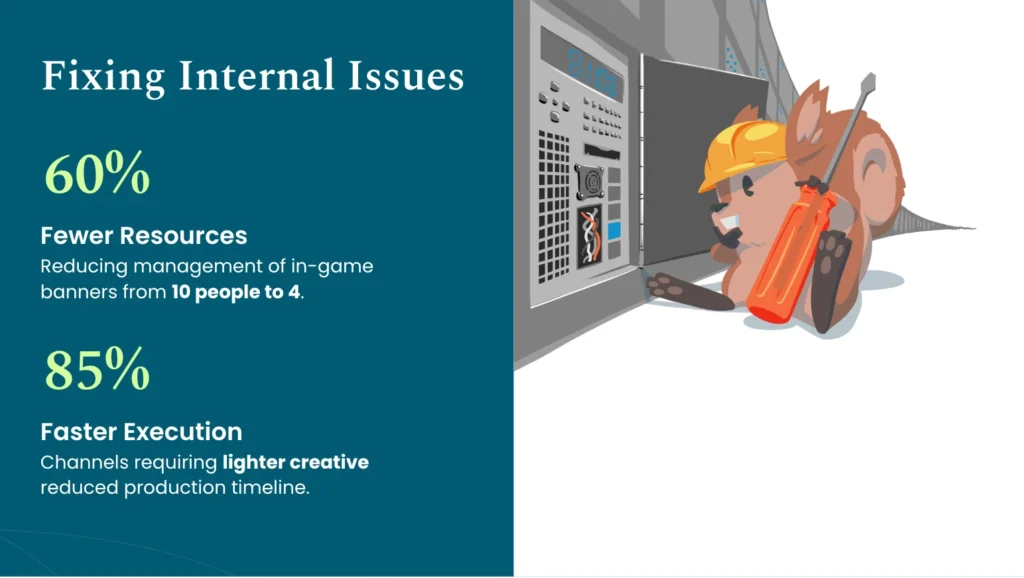
- 60% fewer resources required to manage in-game embedded messages.
- 85% faster execution for ambassador ride campaigns using push notifications instead of email.
- Broader channel coverage despite operating with a smaller CRM team than three years earlier.
Those operational gains unlocked something else: better AI.
Capabilities like send time optimization, channel preference insights, and frequency decisioning become more effective when they’re informed by interactions across multiple channels rather than email alone.
A broader channel mix creates the data those systems need to make smarter decisions for each customer. Just as importantly, Zwift brought stakeholders throughout the process.
Rather than presenting finished projects, the CRM team partnered with product and engineering from the beginning, shared results as they came in, and connected every operational investment to a measurable business outcome. That approach made it easier to earn support for the next initiative.
Key Takeaways for Lean CRM Teams
Rachel Kamel’s framework offers a practical starting point for teams looking to expand beyond email:
- Start with your lifecycle gaps, not the newest channel. Identify where customers are falling out of the journey before investing in new technology.
- Prioritize effort alongside impact. The fastest win isn’t always the biggest opportunity, but it often creates the momentum for larger projects.
- Take advantage of shared infrastructure. Existing SDKs, integrations, and customer data can dramatically reduce implementation time.
- Measure results and share them widely. Early wins help build trust with leadership and secure support for future investments.
- Bring cross-functional partners from the start. Product and engineering teams are more likely to support initiatives they helped shape.
- Create experiences customers want to receive. The best lifecycle marketing removes friction, builds habits, and adds value instead of increasing message volume.
Omnichannel Success Starts With the Next Right Channel
The strongest omnichannel programs aren’t built overnight. They’re built one thoughtful decision at a time.
Zwift didn’t expand beyond email because every new channel was available. The team expanded because each channel solved a specific customer problem, fit an existing workflow, or made the business more efficient.
Along the way, those incremental improvements created broader customer reach, faster execution, and a stronger foundation for AI-powered personalization. For CRM teams, that’s the real takeaway.
Don’t try to launch everything at once. Audit your current lifecycle program, identify the biggest gap, and choose the next channel that will have the greatest impact with the least unnecessary complexity.
Editor’s note: Watch Rachel Kamel’s full Activate Summit session on demand to see the complete framework and additional examples from Zwift’s omnichannel CRM journey.
Frequently Asked Questions (FAQs)
What is an omnichannel CRM strategy?
An omnichannel CRM strategy coordinates customer communications across channels like email, push notifications, in-app messaging, SMS, and embedded experiences so every interaction supports the customer journey instead of operating independently.
How do you choose the next lifecycle marketing channel?
Start by identifying the business or customer problem you’re trying to solve. Then evaluate the implementation effort, expected impact, available customer data, and existing technical infrastructure before investing in a new channel.
Is email still important for lifecycle marketing?
Yes. Email remains one of the most effective lifecycle marketing channels. The objective with email is to complement it with additional channels that improve reach, timeliness, and relevance for specific use cases.
Why should CRM teams prioritize quick wins?
Early successes demonstrate business value, build stakeholder confidence, and create momentum for future investments. They also help teams refine their omnichannel strategy before tackling more complex initiatives.
How does omnichannel marketing improve AI personalization?
AI features like Send Time Optimization, Channel Optimization, and Frequency Optimization become more effective when they have engagement data from multiple channels. A broader channel mix gives AI a fuller understanding of customer behavior.