
Key Takeaways:
- The Apex Consumer understands marketing and uses it to their advantage
- Cart abandonment is a tactic, not a signal—70% use it to trigger discounts
- Consumers are promo-hacking, with 72% switching brands and 64% canceling trials
- 50% of consumers interact with AI during shopping and expect it to be useful
- Loyalty depends on consistent value, with over 50% staying long-term
Marketing has spent the last decade optimizing for scale—more channels, more automation, more output. But the 2026 Customer Engagement Report points to a different reality: the system didn’t just improve. It got figured out.
Consumers now understand how marketing works—and they’re using that knowledge to influence outcomes, not just respond to them.In the first article in this series, we looked at how this shift is creating a growing gap between marketing and customer experience. This piece takes a closer look at what’s driving it: the rise of a more capable, more strategic customer.
How Consumer Behavior Is Shifting Across Age Groups
The rise of the apex consumer is often framed as a generational shift, but the data shows something broader. Younger consumers are more likely to experiment with tactics like promotion cycling or trial optimization, but these behaviors are not limited to one demographic.
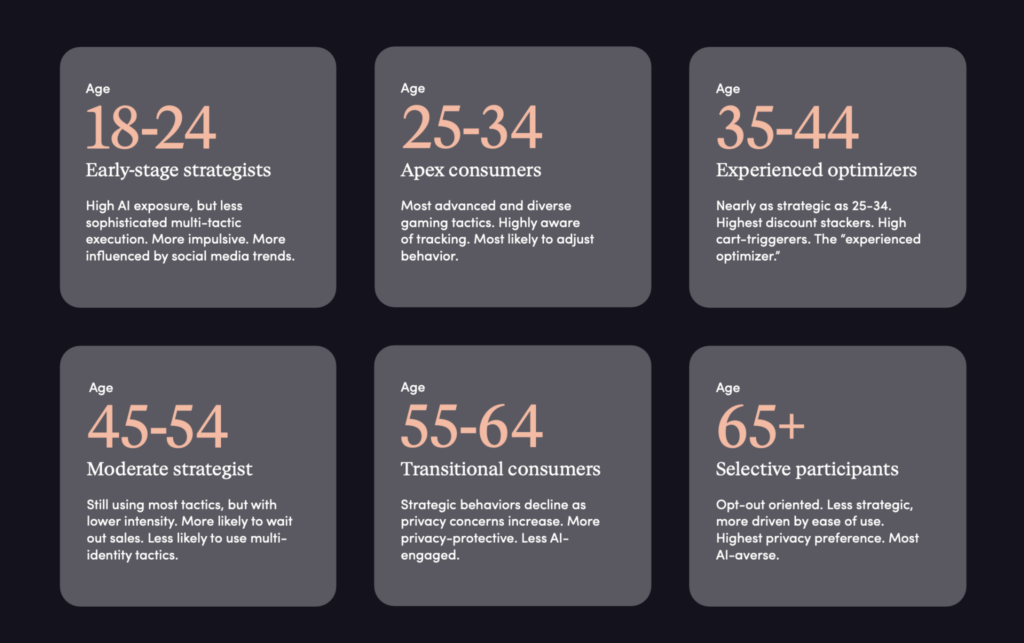
Across age groups, consumers are learning how marketing systems respond and adjusting accordingly. The difference is speed, not direction. Younger audiences adopt these strategies earlier, while older segments follow as patterns become more visible and easier to replicate.
This is not a niche behavior. It is a capability that is spreading and reshaping how engagement works across the entire customer base.
How Consumers Are Navigating Marketing Today
Instead of following designed journeys, consumers are making calculated decisions at each step: when to engage, when to wait, and how to respond based on what they expect the system to do next. What used to be passive signals are now active inputs.
Across the data, these actions group into a small set of consistent approaches. They reflect how consumers learn, test, and refine their behavior over time.
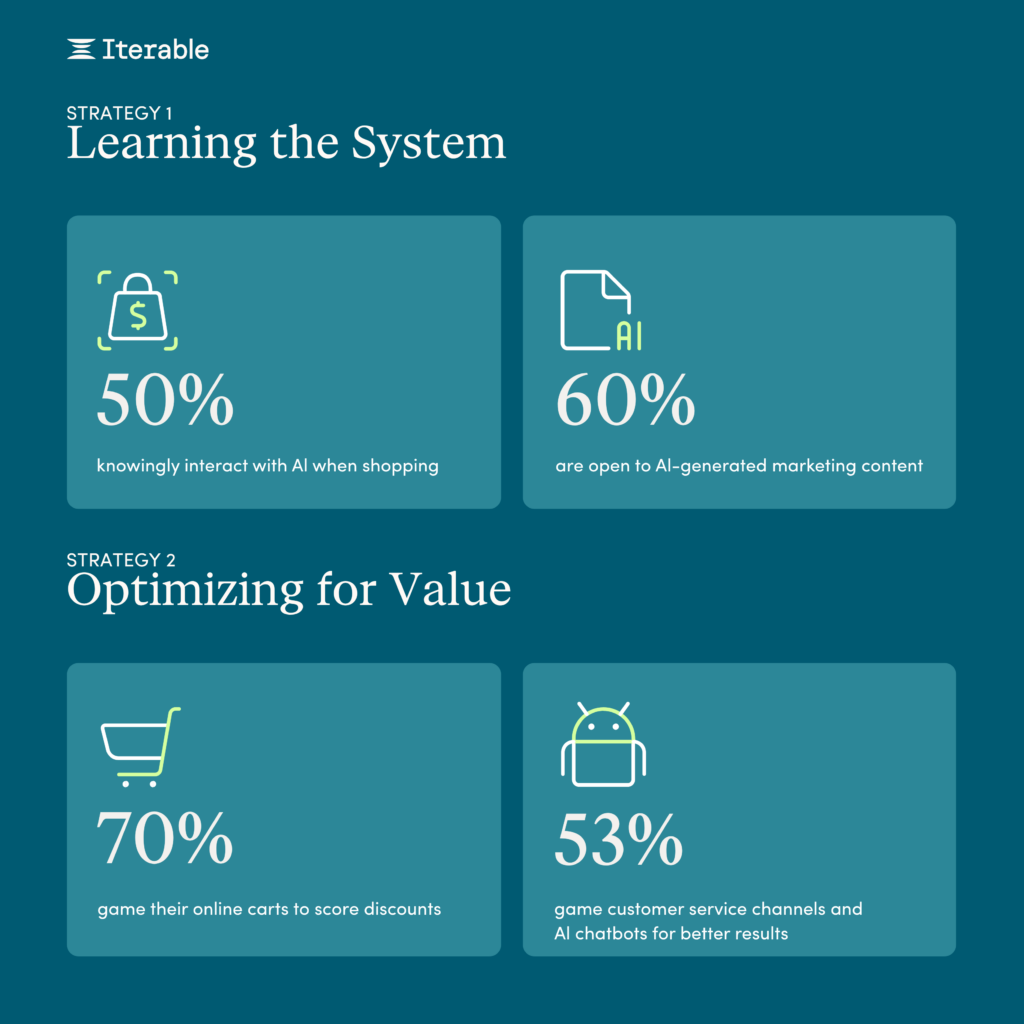
Strategy 1: Learning How Marketing Systems Work
Consumers don’t need a technical understanding of marketing systems to recognize how they behave. As AI becomes more visible in the experience, those patterns are easier to detect—what gets recommended, when offers appear, and how responses change based on behavior.
- 50% of consumers knowingly interact with AI when shopping
- 60% of consumers are open to AI-generated marketing content
- 33% of consumers cite AI-generated misinformation as a top concern
This shifts how engagement is evaluated. Consumers are not just responding to messages—they are assessing the system behind them. AI is judged on whether it improves relevance and clarity. When it does, it builds confidence. When it doesn’t, it raises questions about how decisions are being made.
Strategy 2: Optimizing for Better Value
With a working understanding of how systems respond, consumers begin to push on them. The goal is not just to complete a transaction, but to improve the terms around it.
- 70% of consumers game their carts to trigger discounts
- 53% of consumers use customer service or chat interactions to get better results
- 22% of consumers stack multiple discounts in a single transaction
These behaviors point to a shift in mindset. Consumers are no longer treating offers as fixed—they see them as flexible. Small actions become ways to test what the system will do next. Over time, those tests turn into repeatable tactics.
What looks like friction in the funnel is often intentional pressure applied to get a better outcome.
Strategy 3: Controlling Timing and Channel
Timing has become a lever. Consumers wait, switch, and re-engage based on what they expect to happen next. Channels are used selectively, entered when there is value to capture, and abandoned when there isn’t.
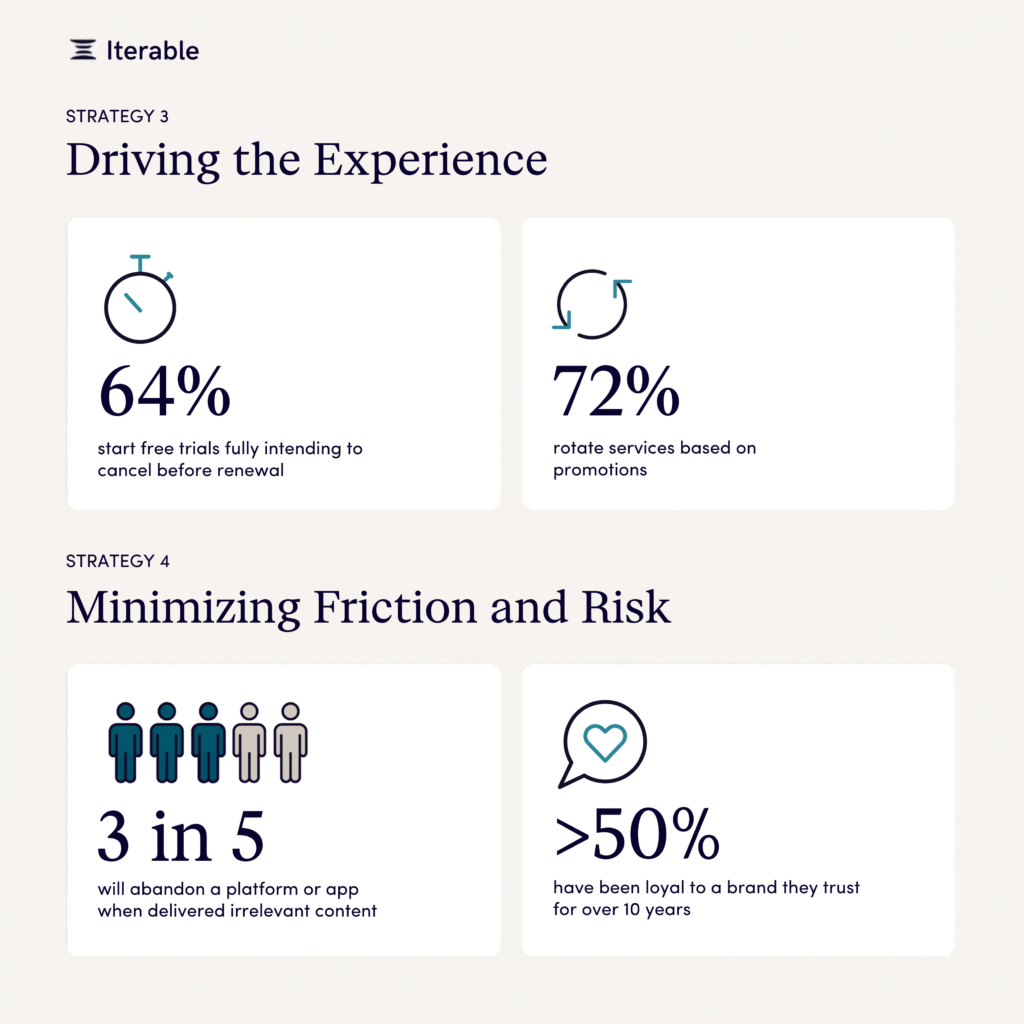
- 72% of consumers rotate between services based on promotions
- 64% of consumers start free trials intending to cancel before renewal
- 67% of consumers delay purchases to wait for better discounts
This introduces variability into the system. Behavior becomes harder to predict. This makes behavior harder to predict. Engagement is no longer about moving forward through a journey, but about choosing the moment that delivers the best result.
Strategy 4: Minimizing Friction and Risk
As consumers become more intentional, they also become more selective. Every interaction is weighed against effort, relevance, and control.
- 3 in 5 consumers leave a platform after irrelevant experiences
- 47% of consumers review or cancel subscriptions at least monthly
- > 50% of consumers stay loyal to brands they trust for over a decade
The difference is consistency. Not just in messaging, but in how the experience holds up over time. Consumers are not just optimizing for value in the moment. They are optimizing for reliability across interactions.
Frequently Asked Questions (FAQs) About Consumer Behavior
1. How is consumer behavior changing in digital marketing?
Consumer behavior is becoming more strategic and selective. 70% of consumers abandon carts to trigger discounts, and 72% rotate between services based on promotions. Engagement is still high, but it’s more strategic. Consumers are testing systems, timing interactions, and optimizing for better outcomes.
2. Why are marketing signals like cart abandonment less reliable?
Because consumers are using them intentionally. Actions like cart abandonment or trial sign-ups are often used to trigger discounts or incentives, not signal real intent. As more consumers learn how systems respond, these signals become less reliable without additional context.
3. How does AI influence consumer behavior?
Consumers are actively engaging with AI as part of the experience. 50% knowingly interact with AI when shopping, and 60% are open to AI-generated content—but only when it’s useful. They engage when AI makes decisions easier or more relevant, and disengage quickly when it feels generic or inaccurate.
4. How are customers more selective about brands and subscriptions?
Consumers are managing their time and attention more closely. 47% review or cancel subscriptions monthly, and 3 in 5 leave after irrelevant experiences. At the same time, more than half stay loyal to brands they trust long-term. Consistency matters more than frequency.
5. How can marketing teams adapt to more selective and strategic consumers?
Adapting requires moving beyond simple triggers and campaigns. Teams need to evaluate signals in context, respond closer to real time, and make more precise decisions about what to send, when, and why. As consumer behavior becomes more dynamic, improving decision-making matters more than increasing output.
The Customer Changed. Marketing Hasn’t Caught Up.
Consumers are no longer moving through journeys as designed. They are testing systems, shaping outcomes, and deciding when and how engagement happens. That changes the foundation of marketing. Signals are less reliable. Timing is less predictable. Control has shifted. The opportunity is still there, but it depends on keeping up with a customer who is actively adapting.
In the next article, we’ll look at the other side of this shift: why marketing, despite more tools and more output, is struggling to keep pace.
Get to know the Apex Consumer. Dive into the 2026 Customer Engagement Report to explore the data behind how consumers are changing, and what it means for marketing. |