
A buzzer beater happens. A star player breaks a record. A team clinches a playoff spot. For three hours, fan attention and willingness to spend hit a peak that almost never repeats itself the same way twice.
The problem is that most sports organizations still can’t act on it fast enough.
Not because the moment wasn’t valuable, but because the marketing stack underneath it was built for a slower era, one where email went out on a schedule and data synced overnight. That model made sense when broadcast was the relationship. It doesn’t anymore.
Today, the relationship is direct, digital, and happening in real-time. Fans are engaging across team apps, social media, streaming platforms, ticketing sites, and more. The opportunity to build a relationship is bigger than ever, but so is the risk of losing it between disconnected, impersonal touchpoints.
The ground has shifted under sports marketing
Three major changes are reshaping how sports organizations reach and retain fans:
Regional broadcast revenue is shrinking. As Regional Sports Networks restructure, the reach that used to come free with a media rights deal is no longer guaranteed. Direct-to-fan digital relationships have gone from a nice-to-have to the primary channel for reaching an audience at all.
The living room is now competing with the stadium, and often winning. Ticket prices are up. A 75-inch 4K TV, no lines, and cheaper concessions are sitting in every fan’s house. If a venue wants someone to choose it over their couch, the experience has to be worth the premium.
Fandom is fragmenting, making first-party data more important: Younger fans are less loyal to the franchise and more loyal to a player, a bet, a fantasy roster, or a feed. At the same time, privacy changes and the decline of third-party cookies are making it harder to understand those fans through rented audiences and third-party signals. It’s a structural shift in what “being a fan” means, making it more important to build an understanding of who fans are.
| What the data shows | Why it matters for marketers |
| Only 29% of Gen Z fans they support a team primarily because of geography[1] | Team-first messaging misses a growing share of the audience. To win, marketers need to segment and message by player affinity. A campaign built around a rookie or star player will reach more of this audience than a franchise-wide send. |
| 70% of younger fans use social media while watching from home[2] | Attention is being split in real-time, not just between broadcasts. To win, marketers need to compete for the same screen instead of a different one. Live stat alerts and polls sent during the game keep the phone working for the team, not against it. |
| Family influence is still the top driver of team loyalty (52% Gen Z, 58% Millennials, 50% Gen X)[3] | Loyalty is inherited and social, not purely transactional. To win, marketers need to build for the household. Family renewal bundles and referral offers reinforce loyalty that already spreads socially. |
| 80% of younger fans say they’re more likely to watch a game they’ve bet on[4] | Second-screen behavior is now core to engagement, not a side habit. To win, marketers need to treat a fan with an active bet on a game as a fan primed for a real-time offer. |
| 40% of fans want all their fandom content and updates consolidated in one place[5] | Fragmented experiences are actively driving fans away, not just failing to retain them. To win, marketers need to consolidate channels instead of adding to them. |
Why the old stack breaks in two specific places
Legacy MarTech wasn’t designed for either problem sports organizations now face.
Game day. The emotional window after a milestone moment is short and it closes fast. When data pipelines run overnight batch syncs instead of real-time triggers, a championship jersey offer that should have gone out in seconds arrives twenty minutes after the fan has left the building, closed the app, or turned off the broadcast. The revenue tied to that moment doesn’t get recovered later. It’s gone.
The off-season. The off-season is a long time to hold someone’s attention with a content calendar and a renewal email. Static segments and scheduled campaigns can’t detect that a season ticket holder’s engagement is quietly declining, and by the time anyone notices, it shows up as a renewal that doesn’t happen.
Both failures point to the same root cause: a stack designed to send messages on a schedule, in an environment that now runs on real-time behavior.
What’s replacing it
Leading organizations are moving away from scheduled campaigns to an event-driven model, one where fan behavior, not a calendar, decides when a message goes out.
To do that, the infrastructure underneath the strategy has to change too. It needs to be built for speed on game day and for continuous engagement the rest of the year.
That shift shows up in a few concrete capabilities:
- Unified fan data. Ticketing, app behavior, stadium Wi-Fi, and purchase history connect into one profile, instead of staying siloed across systems that don’t talk to each other. Iterable unifies that data into a single fan profile and captures unknown attendees through in-app or in-stadium moments, turning unknown visitors into known, addressable fans.
- Real-time triggers. A milestone moment fires a message in seconds, not after the next batch sync. Iterable triggers personalized push, SMS, or email the moment a major play or game-winning event happens, so the offer reaches fans while the emotional window is still open.
- Context-aware delivery. An in-stadium fan gets treated differently than someone watching from home, and a fan whose team just suffered a devastating loss shouldn’t receive a generic post-game merch blast. Iterable determines a fan’s location and emotional context at the moment of send, suppressing insensitive messages after a loss, or matching the right offer (seat upgrade in-venue vs. streaming at home) when the moment is right.
- Predictive retention. Declining engagement gets flagged and addressed months before a renewal deadline, not the week before it. Iterable surfaces early churn signals against a fan’s multi-year history and automatically enrolls at-risk season ticket holders in a personalized renewal journey.
- One connected journey. Ticketing, retail, and live messaging stop operating as separate systems that each treat the same fan like a stranger. Iterable brings them into a single journey, so every touchpoint reflects everything already known about that fan.
This is already working
This isn’t a hypothetical. It’s what two sports organizations shared onstage at Iterable’s 2025 Activate Summit.
The NHL. Aileen Barren, VP of Fan Engagement and Data Strategy at the NHL, described a league that had struggled to turn casual viewers into avid fans. One data point exposed why: the average fan opening NHL emails was 47 years old, a clear sign the league wasn’t reaching the fans it needed to grow. Reaching a younger audience meant diversifying beyond email. As Barren put it at Activate, “We’re just dabbling in SMS.”
The league partnered with Iterable and Movable Ink to move off static campaigns and into real-time ones. Game-day emails are now personalized by geography and team, and update dynamically as the game unfolds, from a pre-game send three hours before puck drop to live score updates during play. The result: a 3x increase in open rates, with a single marketer now able to build more than 30 content versions in a fraction of the time it used to take.
PGA of America. Fahad Zahid, Head of Brand & Digital Marketing at PGA of America, described a different route to a similar outcome: fewer messages, sent with more relevance. Communications are tailored to intent and use channel-specific language depending on whether a golfer is competitive, casual, or wellness-driven. “We speak to them individually, not like mass marketing,” Zahid said at Activate. Instead of bucketing golfers into broad segments, PGA of America built 1:1 relationships with each one. Engagement is up 84%, and unique impressions have doubled.
Both sessions are available in full through Itearble’s on-demand Activate library.
The sports orgs that win are built for the fan, not the schedule
For sports organizations, the goal isn’t simply to send faster messages. It’s to build a fan relationship that doesn’t start at kickoff and disappear when the season ends.
Every ticket scan, app session, merch purchase, content click, and game-day interaction is another signal about what a fan cares about. When those signals carry from one interaction to the next, teams can turn a big play into a purchase, a first-time attendee into a known fan, and a season of engagement into another renewal.
That requires a different approach to sports marketing: one built around how fans actually behave rather than when the next campaign is scheduled to go out.
Because the modern fan doesn’t wait for game day to engage. Your marketing shouldn’t either.
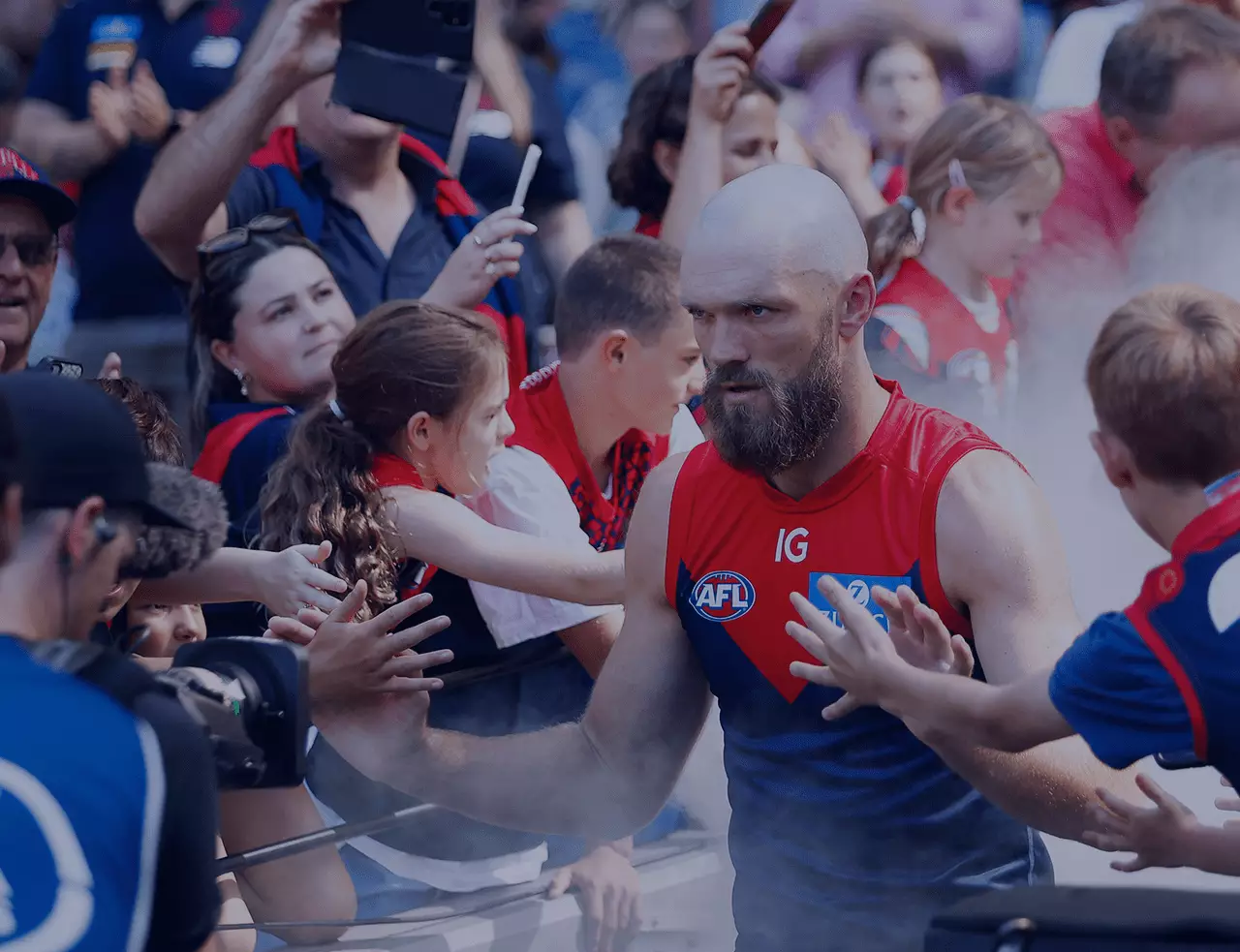
Customer Story: Melbourne Football Club
See how Melbourne Football Club used Smart Ingest and Snowflake to drive a 40% efficiency boost and generate 750+ new memberships.
How the NHL and PGA Engage Sports Fans On and Off the Field
Discover how sports leagues like the NHL use real-time data activation and dynamic personalization to engage fans continuously on and off the field.