

Customers expect brands to remember them. Yet a customer can miss a payment or pause a subscription without that information shaping what the brand does next. When those signals sit in disconnected systems, marketers can miss opportunities to prevent lost revenue or respond to changing customer needs.
At our Fall launch, we introduced a vision for customer engagement that gets smarter with every interaction. Making that vision real means closing the gap between what a brand knows and what its marketers can act on. Information about a customer’s behavior should shape the next decision, not sit unused in another system.
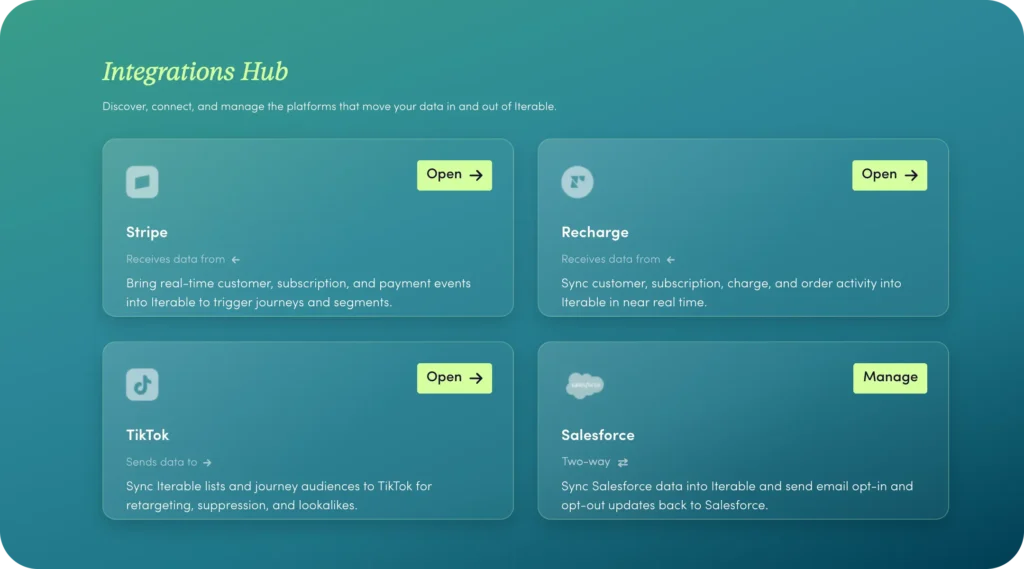
This October, we’re making that shift more practical. New integrations with Stripe, Recharge, and TikTok help marketers respond to payment activity, subscription changes, and purchase behavior. Expanded Salesforce capabilities keep email consent preferences consistent across systems, while Send Time Decisioning now extends to SMS. Workflow enhancements also make it easier to maintain audiences and journeys as programs grow.
The result is a more responsive way to work, where marketers can put customer understanding into practice without adding complexity to campaign execution.
Turn Customer Activity into Action
A failed payment calls for a different response than a completed purchase. October’s integrations help marketers distinguish between those situations and respond appropriately, from recovering payments to updating paid media targeting.
Turn Payment Activity into Timely Engagement with Stripe
A failed payment can put an otherwise healthy customer relationship at risk. If billing activity sits outside the marketing platform, responding before an issue becomes a cancellation may require additional integration work.
Iterable’s new native Stripe integration brings payment and subscription events into Iterable to trigger journeys as customer activity happens. A failed payment can prompt a timely recovery message, giving customers an opportunity to resolve the issue before it leads to lost revenue.
Make Subscription Engagement More Relevant with Recharge
For subscription brands, the first purchase is just the beginning. A customer might pause their subscription or approach a renewal date, but marketing messages don’t always reflect those changes. That disconnect can mean missing an opportunity to retain someone who’s reconsidering their subscription.
The new Recharge integration brings subscription, charge, and order activity into Iterable. A subscription pause can trigger a retention journey, while an upcoming renewal can inform proactive outreach tailored to where customers are in their subscription lifecycle.
Keep Paid Media Connected to the Customer Journey with TikTok
A customer makes a purchase but continues seeing ads for the same product. It’s a familiar disconnect that wastes marketing spend and makes the brand seem unaware of what the customer has already done.
Iterable’s new TikTok integration lets marketers activate existing Iterable audiences in TikTok for retargeting and suppression. By using customer behavior to inform paid media targeting, teams can reduce unnecessary impressions and focus their budgets on more relevant outreach.
Keep Customer Preferences Connected with Salesforce
A customer unsubscribes from marketing emails, but their CRM record still shows them as subscribed. Marketing and CRM teams are now working from different versions of that customer’s preferences, creating unnecessary reconciliation work and increasing the risk of inconsistent communication.
Building on the Salesforce integration introduced at our Fall launch, Iterable now supports email consent updates from Iterable back to Salesforce. Subscription changes can be reflected in existing Salesforce Contact and Lead records without maintaining custom data pipelines.
Make Timing a Smarter Decision
Knowing what to say is only part of effective engagement. When a message arrives can influence whether a customer pays attention.
Reach Customers at the Right Time with Send Time Decisioning for SMS
Sending every customer an SMS at the same hour overlooks differences in when people tend to engage. A message that arrives at an inconvenient time may go unread, even if its content is relevant.
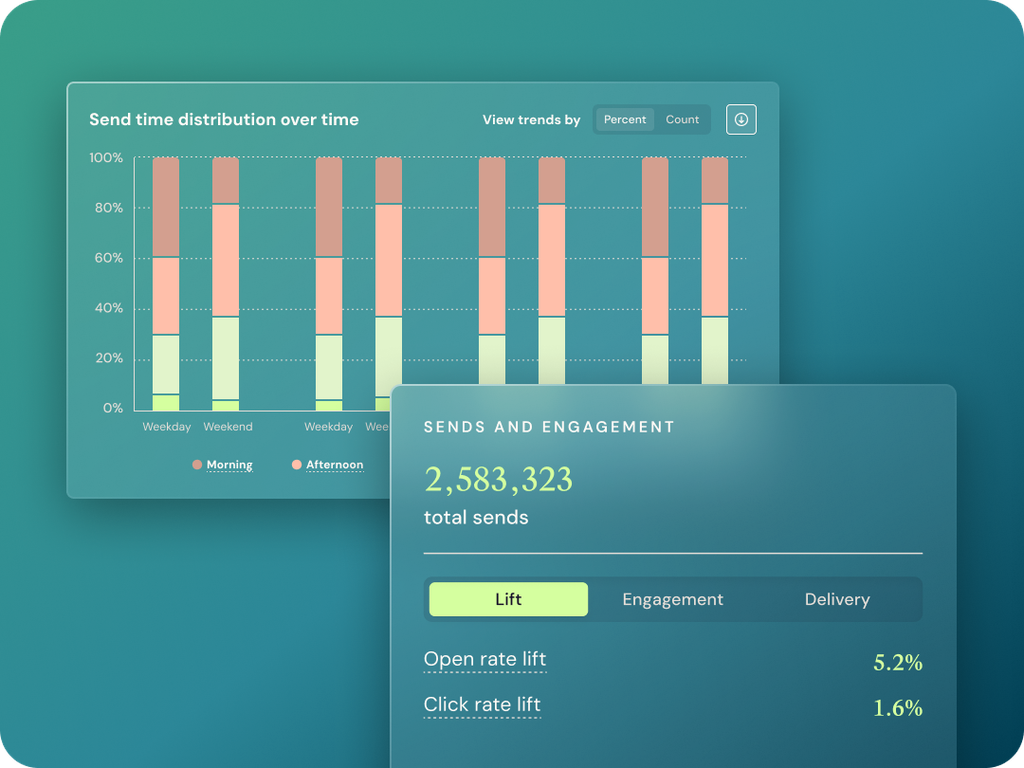
Send Time Decisioning now extends to SMS, using each customer’s past engagement behavior to predict when they’re most likely to engage.
With support across email, push, and SMS, marketers can move beyond fixed send schedules and give messages a better opportunity to reach customers when they’re receptive.
Keep Campaigns Moving as They Grow
As marketing programs expand, maintaining them can become increasingly time-consuming. Audiences need refreshing, and repeated journey steps can make even small updates harder to manage. October’s workflow enhancements help teams spend less time on campaign upkeep.
Keep Audiences Current with Auto-scheduled Lists
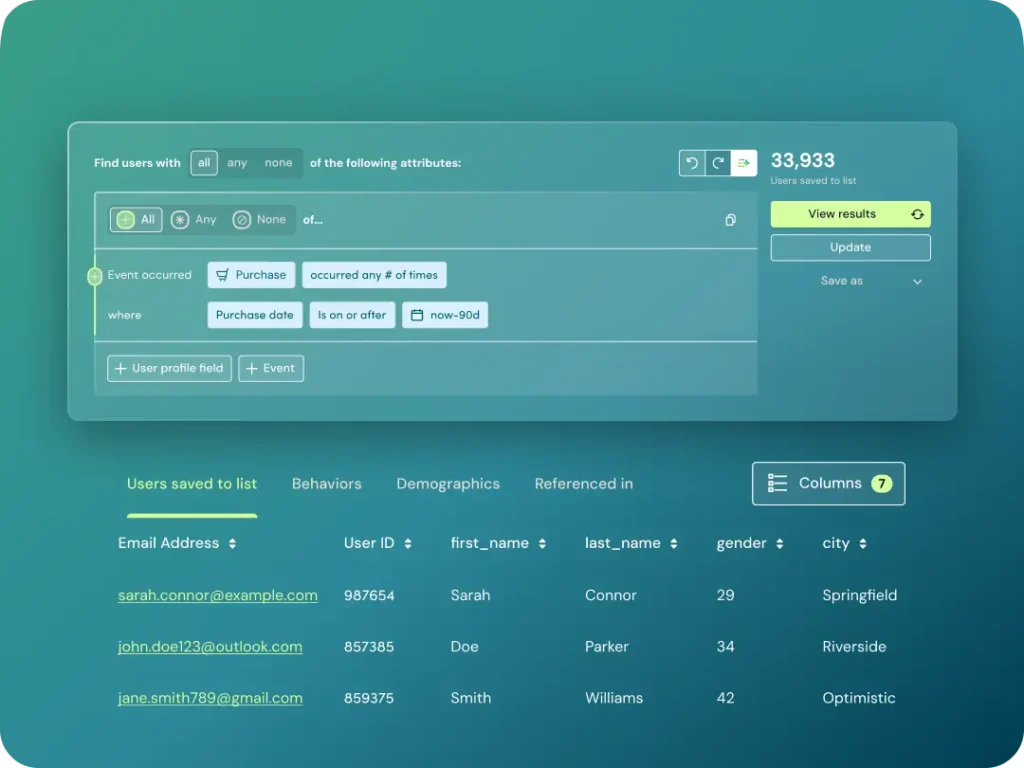
An audience built around recent customer activity can become outdated before the next campaign goes live. Without regular refreshes, marketers risk targeting people based on behavior that no longer reflects their needs.
With Auto-scheduled Lists, marketers can schedule automatic refreshes for eligible segmentation queries. Audiences stay current without someone having to rerun the query before each campaign.
Simplify Repetitive Journeys with Loop Tile
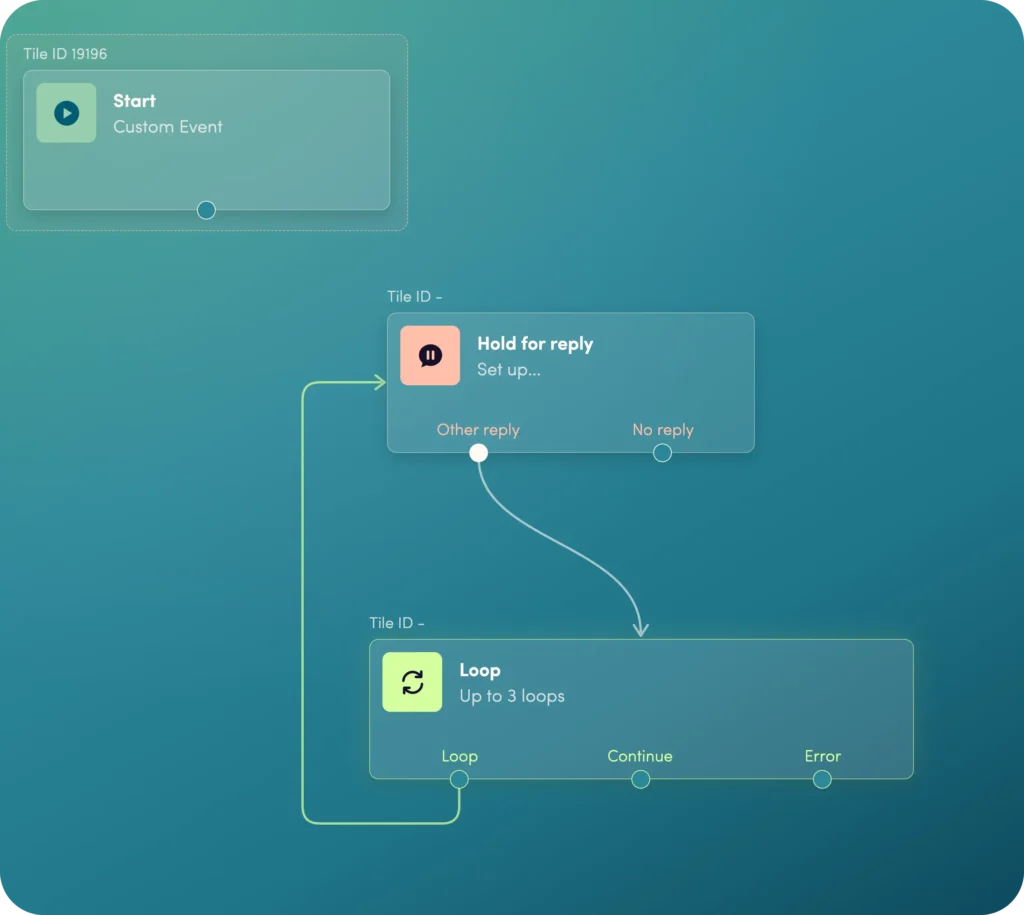
Duplicating the same sequence of steps across a journey creates more than a crowded canvas. Each copy becomes another section to review and update whenever the journey changes.
The new Loop Tile lets marketers repeat a section of a journey within defined limits. Instead of maintaining multiple copies of the same logic, teams can manage recurring workflows more efficiently as their programs evolve.
Make Every Customer Signal Count
The difference between knowing your customer and delivering a relevant experience is what you do with that knowledge.
October’s releases help marketers close that gap. A payment issue can prompt a recovery journey, and engagement patterns can inform when the next message arrives. Behind the scenes, simpler workflows make it easier to keep those experiences running as programs grow.
With Iterable, customer understanding doesn’t have to stop at insight. It can shape what happens next.
Explore the full October release notes to see everything that shipped.
October Spotlight FAQs
October’s Product Spotlight introduces new integrations with Stripe, Recharge, and TikTok, along with expanded Salesforce capabilities for syncing email consent updates back to Salesforce. The release also extends Send Time Decisioning to SMS and introduces workflow enhancements, including Auto-scheduled Lists and Loop Tile.
Stripe and Recharge bring payment and subscription activity into Iterable, helping marketers respond to events such as failed payments, subscription pauses, and upcoming renewals. TikTok enables marketers to activate Iterable audiences for paid media retargeting and suppression, so targeting can reflect what customers have already done.
Building on the Salesforce integration introduced at the Fall launch, Iterable now supports email consent updates from Iterable back to Salesforce. When customers subscribe or unsubscribe, those changes can be reflected in existing Salesforce Contact and Lead records, reducing the need for custom data pipelines.
Send Time Decisioning uses each customer’s past engagement behavior to predict when they’re most likely to engage. With support now extended to SMS, marketers can apply personalized send-time optimization across email, push, and SMS rather than relying on one send time for an entire audience.
Auto-scheduled Lists allow eligible segmentation queries to refresh automatically, helping marketers maintain current audiences. Loop Tile allows marketers to repeat sections of a journey without duplicating the same steps, simplifying ongoing maintenance.