
In today’s enterprise landscape, innovation moves fast—but value doesn’t always keep up. Companies are experimenting with AI, reimagining data strategy, and rethinking how teams collaborate. The challenge? Turning all that innovation into measurable business outcomes.
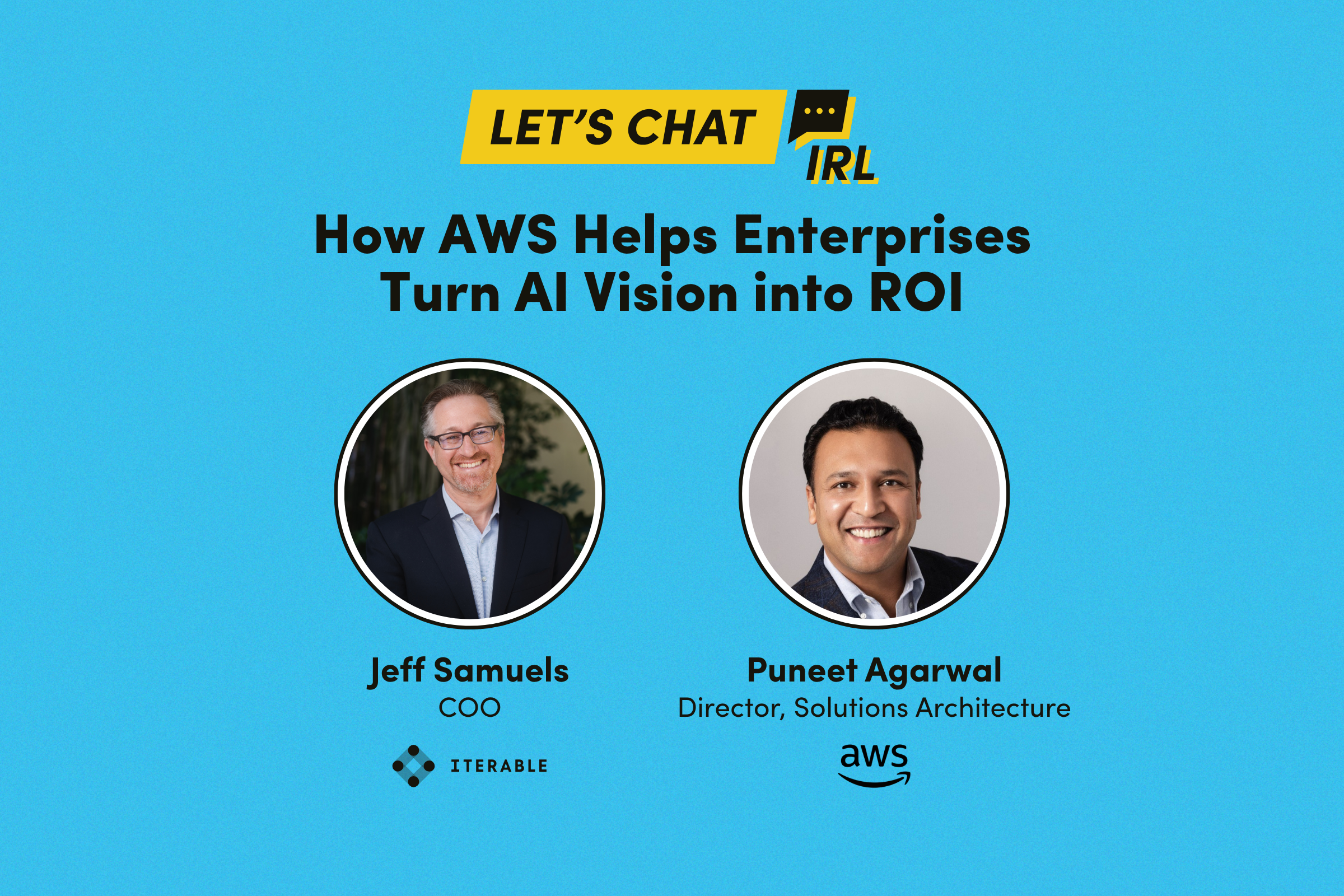
At Activate NYC, we sat down with Puneet Agarwal, Director of Solutions Architecture at Amazon Web Services (AWS), to explore how the world’s leading cloud provider helps organizations accelerate transformation without losing focus on ROI.
From Proof of Concept to Proof of Possible
Across industries—from travel to semiconductors to advertising—Agarwal’s teams help customers design and scale new architectures on AWS. His group acts as embedded partners, “engineers who are part of your team,” he explains, working side by side with IT, product, and business leaders to co-innovate.
But innovation, he cautions, can’t live in isolation. Too often, tech teams pursue “easy-to-implement but hard-to-measure” projects. The key to ROI is picking the right use cases—the ones with clear, measurable business impact.
That’s why many companies start in the contact center, where metrics like churn, sentiment, and NPS already exist. “Start where it matters to the business,” Agarwal says. “Build organizational muscle for measuring ROI.”
Data Is the Foundation of AI
Behind every successful AI initiative lies great data (and a great data strategy). As AI adoption accelerates, enterprises are realizing that their systems are only as smart as the information feeding them.
According to Agarwal, the most forward-thinking organizations are asking tough questions: Do we have high-quality data? Is it organized correctly? Are our governance structures in place? The companies that answer those questions well are the ones scaling AI successfully.
He also emphasizes the cultural dimension: “Change management, cultural transformation, and workforce enablement. These are critical for differentiating organizations that scale AI successfully. It’s about bringing the entire organization along—business, operations, and technology—so ROI materializes.”
How AWS Helps Enterprises Innovate at Scale
AWS approaches this era of rapid change like “the world’s largest startup,” Agarwal says—operating with agility, customer obsession, and experimentation at its core.
Recent initiatives include:
- $100M expansion of the Generative AI Innovation Center to help customers build “minimum lovable products” and move from idea to production.
- A new AI Development Lifecycle (AIDLC) framework that helps organizations rethink how AI transforms software development.
- Model-agnostic tools like AgentCore, which let customers use Amazon, open-source, or third-party models without getting locked in.
These moves reflect AWS’s belief that innovation should be accessible, flexible, and measurable—and that architecture, like organizations, must be designed for change.
The Next 18 Months: Smarter, Faster, Cheaper AI
Looking ahead, Agarwal sees acceleration on every front: More AI applications in production, significant investment in agentic AI, and faster, cheaper inference. As models improve, enterprises will unlock entirely new user experiences, from travel and healthcare, to education and media.
But the lesson from AWS is clear: future-proofing isn’t about predicting what’s next—it’s about building for what’s possible. Agile architectures, strong data foundations, and empowered teams will define the winners of this next wave of innovation.