
Key Takeaways
- Creativity is not an innate talent reserved for a select few. It is a skill every marketer can develop with the right habits and frameworks.
- AI can accelerate creative thinking, but differentiated ideas still come from understanding people more deeply than data alone can reveal.
- The strongest creative ideas begin by uncovering the “radical why” behind customer behavior.
- Breakthrough thinking happens when diverse perspectives, disciplines, and experiences are intentionally brought together.
- A clear mission gives creative ideas direction and helps organizations make more confident decisions.
Generative AI has changed the rules of creative work.
Today, marketers have access to many of the same AI tools, the same customer data, and the same ability to generate content at scale. As those capabilities become more accessible, technology alone is no longer enough to create differentiation.
That was the central message of Abigail Posner’s keynote at Activate Summit. Drawing on her experience as founder of The Human Code Company, former Head of U.S. Creative Works at Google, and an anthropologist, Posner argued that creativity is becoming one of the few sustainable competitive advantages marketers have left.
Her framework is built around three principles:
- Seek the radical why.
- Look for the links.
- Discover your mission.
Together, they provide a practical approach for developing stronger ideas in a world where AI is making execution increasingly accessible.
Watch Abigail Posner’s full Activate Summit session on demand to explore the complete framework.
Why Creativity Is a Business Skill, Not Just a Creative Skill
Creativity is often associated with designers, writers, and creative directors.
Posner challenged that assumption. She argued that creativity is a business capability because every team is expected to solve problems, adapt to change, and identify new opportunities for growth.
AI is accelerating that shift by taking over much of the repetitive work marketers once spent time on. Rather than replacing creativity, automation creates more space for the work that remains uniquely human.
Posner highlighted a recent Deloitte Human Capital Report, which argues that organizations will succeed by reinvesting efficiency gains into new forms of value creation and worker performance rather than simply automating faster.
For marketers, that means spending more time on work that requires:
- Curiosity.
- Judgment.
- Original thinking.
- Human understanding.

As Posner summarized:

Takeaway: As AI becomes more accessible, competitive advantage will increasingly come from the quality of human ideas rather than access to technology.
Seek the Radical Why, Not the Easy Answer
According to Posner, great ideas rarely begin with the first answer. They begin by understanding why people behave the way they do.
Customer data tells marketers what people buy, search for, or click. Those behaviors are useful signals, but they rarely explain the motivations behind them. The opportunity is uncovering the human needs that drive those actions.
Posner calls this process seeking the radical why because surface-level answers are easier than ever to find. AI excels at summarizing existing information, but its responses naturally converge toward what she described as the “milky middle.” Marketers create stronger ideas by going beyond those averages and combining multiple forms of research.
That includes:
- Customer interviews.
- Search behavior.
- AI-assisted research.
- Observation in the field.
- Conversations with frontline teams.
This philosophy shaped Posner’s work at Google, where she launched the Humanizing Digital initiative. Instead of focusing only on digital behaviors, her team studied why people developed certain relationships with technology. Understanding motivation, rather than simply measuring activity, led to stronger products, campaigns, and customer experiences.
The impact of that approach becomes clear in two of Posner’s best-known case studies, both of which show how asking better questions can fundamentally change the creative outcome.
Takeaway: Better ideas start with better questions. Creativity grows when marketers move beyond customer behavior to understand the motivations behind it.
Nike Looked Beyond the Product
In the 1980s, Nike faced growing competition from brands like Reebok and New Balance.
Rather than simply adjusting its advertising, the company revisited a more fundamental question: Why do people buy athletic apparel?
Its research revealed a different insight than expected.
- Consumers didn’t aspire to become professional athletes.
- They already saw themselves as athletes.
- They wanted a brand that reflected that identity.
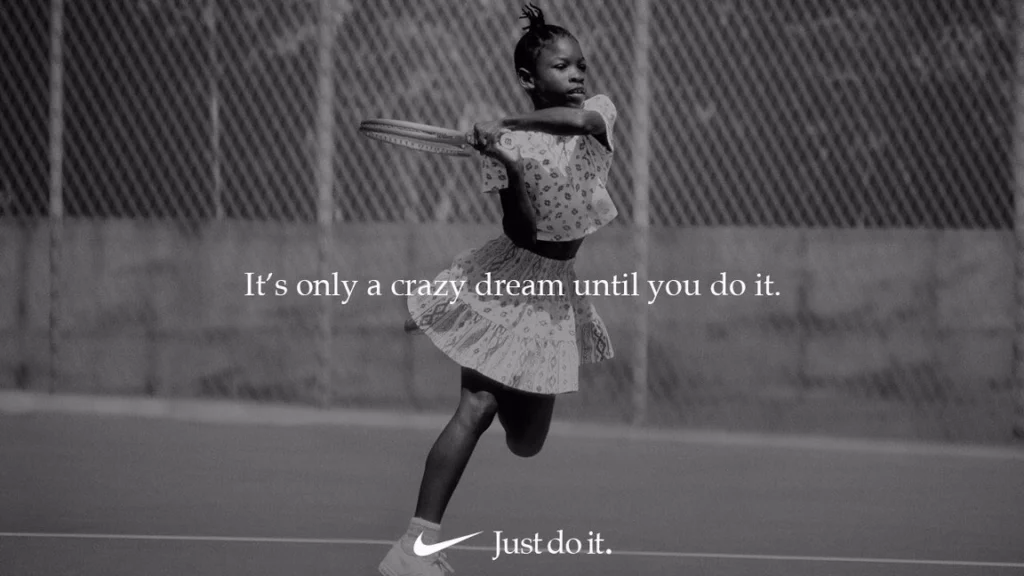
Instead of celebrating elite performers, Nike celebrated the athlete in everyone, a message that continues to resonate decades later because it reflects a lasting human truth rather than a passing trend.
The Navy Replaced Assumptions With Research
Posner also shared a project her team led at Google for the U.S. Navy.
The original recruitment campaign resembled a Hollywood action film, emphasizing fighter jets, aircraft carriers, and military action. Rather than repurposing that content for YouTube, the team chose to start over by asking whether the online audience was motivated by the same things as traditional television viewers.
To answer that question, they pulled insights from several different sources.
- Google Suggest searches revealed questions about education and career development rather than combat.
- Google’s AI-powered Insights Finder showed that prospective recruits also consumed self-improvement content.
- Recruiters in the field confirmed they were seeing the same shift in candidate motivations.
Those signals pointed to a very different audience. Instead of aspiring warriors, many prospective recruits viewed the Navy as an opportunity for personal growth and education.
That insight transformed the creative strategy. The new campaign focused on individual stories of development and purpose rather than military spectacle, resulting in a 276% increase in Navy signups.
Takeaway: AI can accelerate research, but it cannot replace human curiosity. The strongest ideas emerge when marketers challenge assumptions, combine multiple sources of insight, and seek the motivations behind customer behavior.
Look for the Links
Insight is only the first step. The next challenge is turning that insight into an idea.
Posner argued that creativity doesn’t arrive through sudden moments of inspiration. It emerges when people connect two or more seemingly unrelated concepts in a way that reveals something new. Whether it’s a product, campaign, or business strategy, breakthrough ideas are often combinations that no one thought to bring together before.
Research supports that way of thinking. Posner referenced Leonardo da Vinci’s “law of continuity,” which suggests the human brain naturally tries to connect unrelated ideas. She also pointed to neuroscience showing that exposure to diverse experiences creates more opportunities for those mental connections to occur.
For marketers, that means deliberately expanding the range of ideas they bring into the creative process.
Some practical ways to do that include:
- Explore industries outside your own.
- Introduce unrelated objects or themes into brainstorming sessions.
- Use AI to generate unexpected associations and alternative perspectives.
- Encourage teammates from different disciplines to contribute ideas.
Posner also challenged the idea of the lone creative genius. She highlighted research from Cannes Lions showing that award-winning campaigns consistently involved larger, more diverse teams. In fact, winning campaigns credited 26% more contributors than their peers, with strategy, analytics, production, and creative disciplines all represented.
Her recommendation was simple: don’t brainstorm alone. Bring together people who think differently, expose the team to new perspectives, and trust that stronger ideas will emerge through collaboration.
Takeaway: Creative breakthroughs rarely come from isolated thinking. They happen when diverse people, experiences, and ideas are intentionally brought together.
Discover Your Mission
Understanding people generates better insights. Connecting unexpected ideas leads to stronger creative concepts. The final step is deciding which ideas are worth pursuing.
Posner argued that the most creative organizations aren’t guided by brainstorming alone. They’re guided by a clear sense of purpose. Not the kind of mission statement written for an annual report, but a genuine belief about the value the organization wants to create in the world. That belief becomes a filter for creative decisions.
She shared an interesting observation from her advertising career. While helping companies define their mission, her teams noticed something unexpected: once organizations became clear about what they stood for, they consistently produced more original ideas. Creativity wasn’t separate from purpose. It was strengthened by it.
Several well-known brands illustrate that principle.
- Dove built its brand around celebrating authentic beauty. When it came time to refresh its anti-aging product line, that mission forced the company to rethink its approach. Rather than reinforcing the idea that aging should be fought, Dove introduced its Pro-Age line because it better reflected what the brand believed.
- Airbnb’s mission extends beyond helping people book a place to stay. By helping travelers feel like locals, the company naturally expanded into experiences like cooking classes and local activities because they supported the same purpose.
- Google demonstrated the same principle with Pixel Guided Frame, an AI-powered accessibility feature that helps people who are blind or have low vision take photos independently. Rather than showcasing AI for its own sake, the product expressed Google’s broader mission of making information and technology more accessible.
For marketers, the lesson is practical. Before evaluating whether an idea is clever or likely to perform, ask whether it reflects what your brand actually stands for.
If the answer isn’t obvious, Posner recommends “going back to the attic.” Revisit why the company was founded, what problem it set out to solve, and what conviction drove those early decisions. That purpose may need to evolve, but it often remains the strongest source of creative direction.
Takeaway: Mission doesn’t limit creativity. It gives creativity direction, helping teams generate ideas that are both original and authentic.
Creativity Is a Human Advantage
AI has made it easier than ever to generate content, analyze data, and accelerate creative work. That shift changes where marketers create value.
As Posner’s framework demonstrates, the competitive advantage isn’t producing more ideas. It’s producing ideas that matter.

It grows when teams combine diverse perspectives and unexpected connections. And it becomes sustainable when every idea is anchored to a clear sense of purpose. Together, those three principles create a repeatable approach to creativity that AI can support but not replace.
Posner closed her session with a reminder that creativity isn’t reserved for artists or creative directors. It’s a capability everyone can develop. The opportunity for marketers is to use AI to expand their thinking, while relying on curiosity, judgment, and mission to shape ideas that technology alone cannot produce.
Before your next brainstorming session, ask one question: What’s the radical why behind your audience’s behavior? The answer may change everything that follows.
Frequently Asked Questions (FAQs)
How can I be more creative at work?
According to Abigail Posner, creativity begins with three practices: understand the motivations behind customer behavior, intentionally connect ideas from different disciplines, and anchor creative decisions to a clear mission. These habits help marketers move beyond predictable ideas and develop work that stands out.
Can AI make marketers more creative?
AI can accelerate research, brainstorming, and divergent thinking by helping marketers identify patterns and generate new associations. However, Posner argued that human curiosity, judgment, and purpose remain essential for creating ideas that resonate with customers.
What is the “radical why”?
The radical why is Posner’s approach to uncovering the deeper motivations behind customer behavior. Rather than accepting surface-level data, marketers combine research, observation, AI, and conversations with customers to understand why people make decisions.
Why does mission matter for creativity?
A clear mission gives teams a consistent framework for evaluating ideas. Rather than chasing trends or producing work that feels disconnected, marketers can use purpose as a filter to create ideas that reinforce what their brand stands for.