
Like it or not, if you’re a marketer today, there’s a good chance you’re locked into a war with your competitors for consumer mindshare. And the heat is on!
Customers forge stronger relationships with the brands that prioritize high-touch service and seamless experiences—those who slip are left behind.
This is why it’s critical to take an integrated approach to cross-channel marketing: you’re able to deliver the immersive brand experiences that your customers crave.
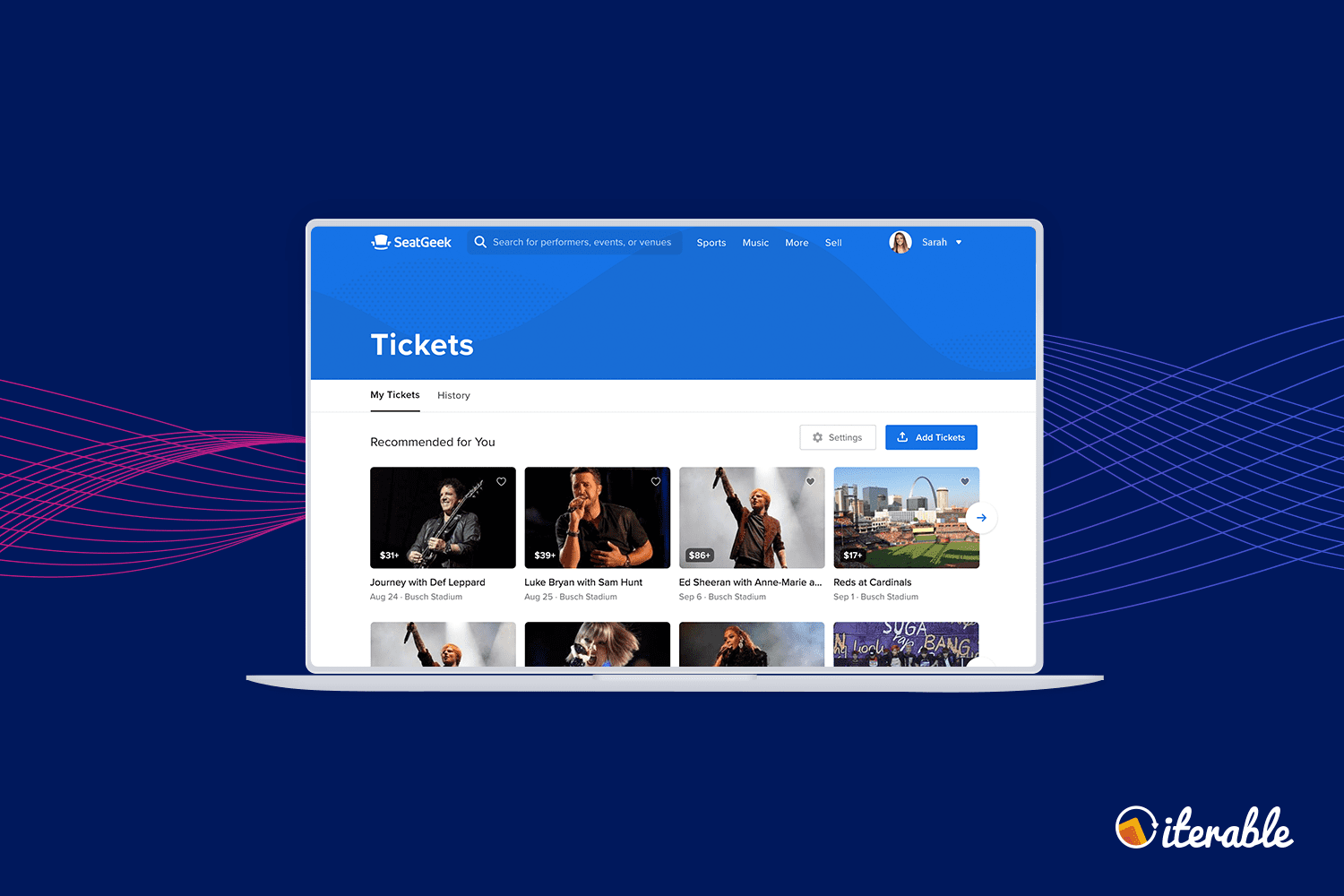
Our friends at SeatGeek have been making big changes to their marketing programs and now find themselves ahead of the pack.
You Snooze, You Lose
Great marketing experiences drive sales—there’s no way around that. Upping your own ante when it comes to giving customers exactly what they want, when they want, is your gateway to huge company gains.
Take a step back and think about your own consumer experiences and the standards you uphold when interacting.
- When a brand fails to meet your expectations, you choose a competitor. That’s how it is in today’s Now Economy.
- Unfriendly mobile experiences are a turn-off. You can spot them immediately—and tolerating them is no longer required.
- You dictate the buying process. Technology removed traditional barriers to research, comparison, and evaluation, and consumer choice wins out.
Designing a cross-marketing strategy from your customers’ point of view while satisfying your business goals is how you’ll get ahead.
The Road to Engagement
Step 1: Picture the End Step
Just as the saying goes, “visualize success.” We can all think of moments where brands really nail it: a well-timed email promoting the exact item you were thinking about or a push notification that reminded you of something you would’ve otherwise forgotten.
These experiences likely aren’t happening by accident. Brands who excel at marketing are wielding their data, staying up-to-date with changing user behaviors, and consistently delivering valuable outreach.
Visualize your optimal customer marketing experience. Think about these open-ended questions and then work backward from your answers.
- What does a perfect content experience for your company look like?
- What personalization needs to happen to manufacture those serendipitous moments?
- How can you use your marketing channels to enhance the experience and message value?
- What information will you need and which processes are needed to get there?
You’ll also need to consider the marketing implications below.
- Any user data you’ve accumulated needs to be centralized. Individual user profiles need consolidation—old data, new data, and third-party data.
- Channel centralization is essential to seamless cross-channel communication. If your systems aren’t coordinated, you’re at risk of message fragmentation.
- Content personalization is married to the user and their channels. Map content to your customers’ characteristics (behaviors and channels) to become more effective.
The ideal cross-channel engagement experience is rooted in data and championed through personalization and preference.
By first picturing your ideal marketing state and then evaluating the requirements you’ll need to reach them, you’ll reach an understanding of where to prioritize your efforts.
Step 2: Rate Yourself
Now that you have a more comprehensive understanding of what you want to achieve and the steps you must take to get there, it’s time to take a closer look and scrutinize your current setup.
Ask yourself the following questions to see what areas you can improve on.
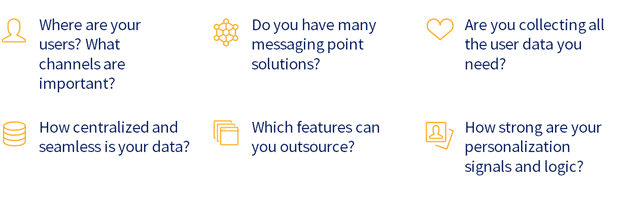
Your answers will help you devise the right strategy for your business as you overhaul your marketing approach. SeatGeek came to the following conclusions about what their current marketing strategies were lacking.
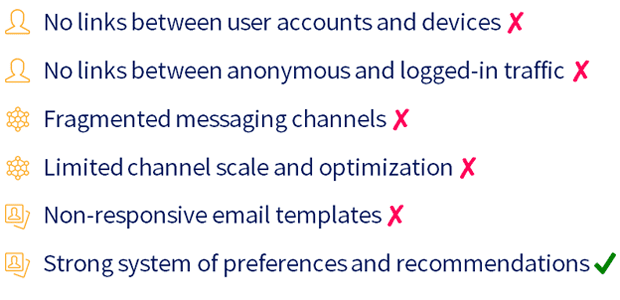
By identifying marketing shortcomings, SeatGeek was able to pursue the changes requiring the most focus.
Which gaps in your brand experience will you uncover?
Step 3: Initiate Change
Congrats, you’ve made it this far! Now that you understand what it takes and what you can improve, the time for change is now.
Start with the lowest hanging fruit and work your way toward the more complex challenges.
As an example, let’s examine SeatGeek’s evolution toward integrated cross-channel marketing.
SeatGeek Marketing v1.0
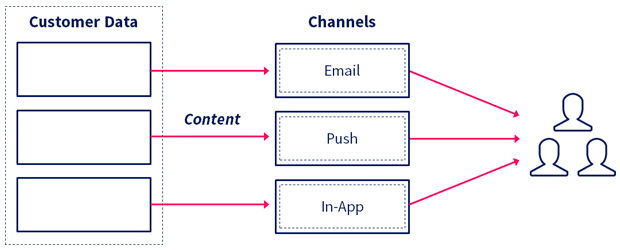
Throughout its early years of operation, SeatGeek was not using its customer data to its full extent.
Likewise, SeatGeek maintained several messaging channels: two different ESPs for transactional and marketing messages, as well as separate solutions for mobile messaging.
To make matters more challenging, they didn’t have a full-time team dedicated to managing these systems.
As the illustration above demonstrates, their data was only able to be fed into certain point solutions—each tool was using small pieces of the broader dataset to power its channel-specific messaging.
As a result, SeatGeek users weren’t always receiving messaging which reflected their most recent interactions. Their previous outreach process was limited to a very linear flow of information between channels, fragmenting their customers’ experiences.
Centralizing their marketing became a top priority for their business.
SeatGeek’s Cross-Channel Marketing Fluency
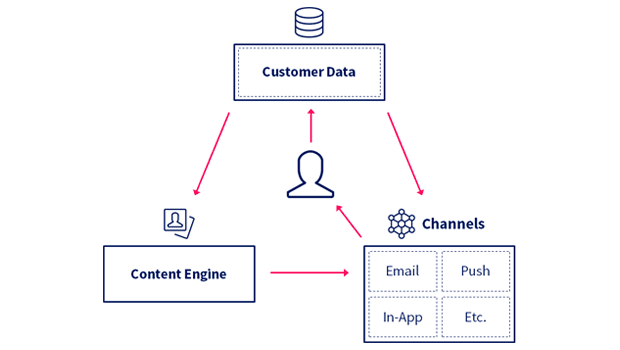
By moving away from decentralized marketing which piecemealed content to users’ multiple devices, their cross-channel evolution granted their team full user visibility.
With a better understanding of their customers’ behaviors and interests, SeatGeek now has the ability to deliver the types of personalized content that keeps their millions of users engaged.
Trust the Process
SeatGeek charted their ongoing journey in the graph below. Using the notion of scale (amount of messages sent) and sophistication (coordination of data and tools), we can see the evolution of their marketing over the past few years.
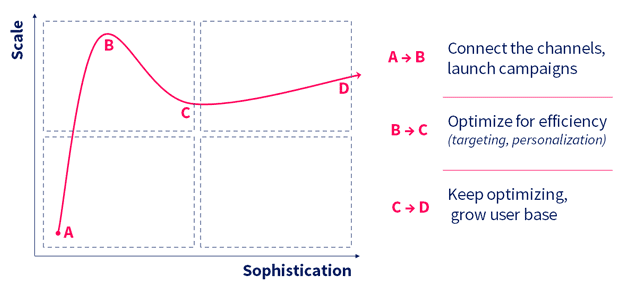
The Starting Line: A → B
Early on, SeatGeek started small by finding quick and easy ways to increase their message scale using blast campaigns. The team created, then automated, high volumes of messaging as part of their early experimentation to learn more about their users.
This resulted in capturing a ton of new data that could now be used to better personalize their future outreach.
Targeting vs. Blasting: B → C
Data in tow, SeatGeek started revising and adjusting their marketing cadence. They were sending fewer total messages, but enhanced targeting efforts were generating the same or greater returns in total.
Personalization was a big differentiator for SeatGeek’s marketing—sending small numbers of messages were gaining sufficiently higher response and revenue rates.
Micro-Optimization: C → D
Present day SeatGeek is committed to refining and optimizing outreach. They’ve built a successful marketing framework that’s generating positive results, but they refuse to settle!
They’ll look for new ways to innovate by fine-tuning their processes. “Micro-optimizations,” as they call them, will help them iterate in further pursuit of success, and they anticipate their messaging scale will grow in tandem with their customer base.
Learn More About How SeatGeek Achieved Success
SeatGeek made all the right moves when it came to maximizing the customer experience: they implemented an approachable strategy and addressed their internal process limitations.
Now the team will reap the rewards of their hard work—a highly engaged and growing audience, increasing revenues, and solidification of their place atop the event ticketing industry.
To follow in SeatGeek’s footsteps, download their full case study and contact us today to learn how Iterable can help you grow.