
Customers remember every interaction. Most marketing systems don’t.
Customers expect brands to know who they are, remember what matters, and make every interaction feel more personal than the last. AI has only raised the bar: 71% of customers expect personalized experiences, while 76% feel frustrated when brands fall short, according to McKinsey.
But most marketing systems still operate with an incomplete picture. Customer data lives across different platforms, channels work independently, and context gets lost between interactions. The result is that every campaign starts from a different version of the truth.
That is the context gap.
Instead of building on what the brand already knows about the customer, marketers spend time recreating it. Messages reset rather than continuing the conversation. AI may help teams move faster, but without the right context, it only scales generic experiences.
This Fall, Iterable is closing that gap.
A new way to turn context into intelligence
Iterable’s Fall Launch is built around a simple idea: customer interactions should build intelligence over time, making each experience more relevant and engaging than the last.
New integrations connect signals from across your marketing ecosystem. Rich mobile channels turn that context into interactive experiences. Nova Intelligence helps marketers understand what is happening, decide what to do next, and act before opportunities are lost.
Together, these capabilities create a marketing system that compounds what it learns. Each response adds context. Each decision becomes more informed. Each experience gets smarter than the last.
1. Build on what you already know
Most marketing platforms understand fragments of the customer. CRM data lives in one system, product and account data in another, and real-time business information somewhere else entirely.
Marketers are left moving data between tools, duplicating information across profiles, and relying on technical teams to connect the context they need.
Iterable brings that context directly into the workflows where marketers build audiences, journeys, and campaigns. Every engagement can begin with a more complete and current understanding of the customer, rather than starting from scratch.
Connect and manage your ecosystem in one place
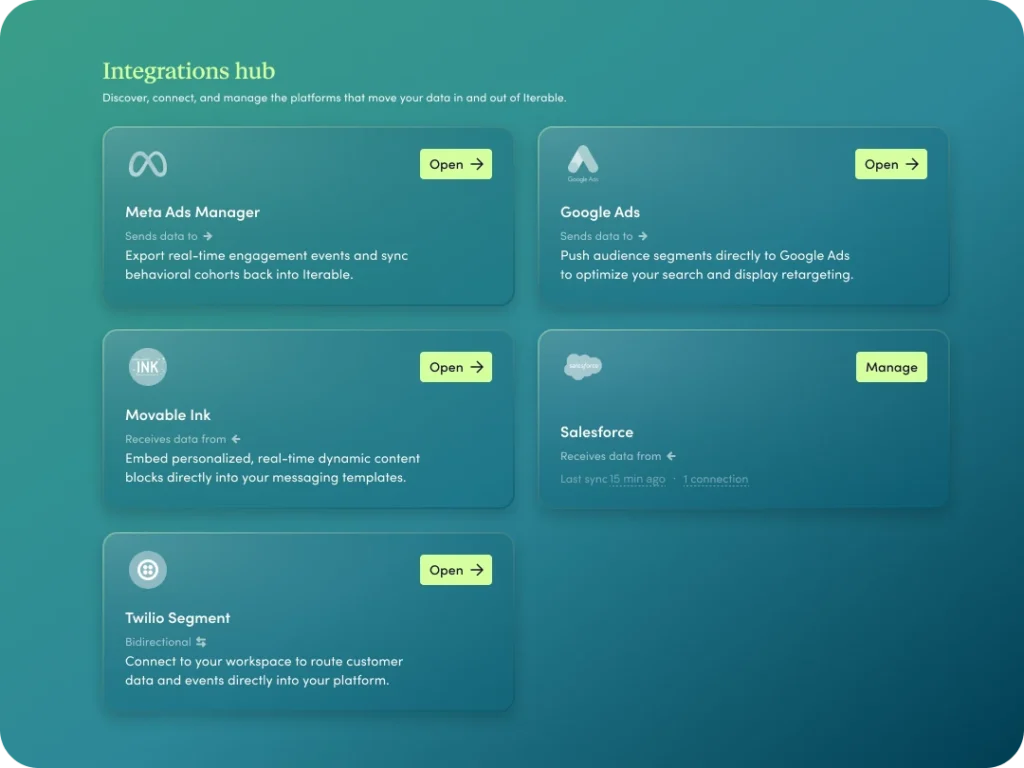
Integrations Hub is a centralized, in-product experience for discovering, connecting, configuring, and managing the platforms that move data into and out of Iterable.
Instead of navigating different setup experiences or relying on third-party integration tools, marketers can manage supported connections directly within Iterable. This creates a more consistent foundation for activating customer data across CRM, advertising, commerce, and content platforms.
Connect Salesforce context to every customer experience
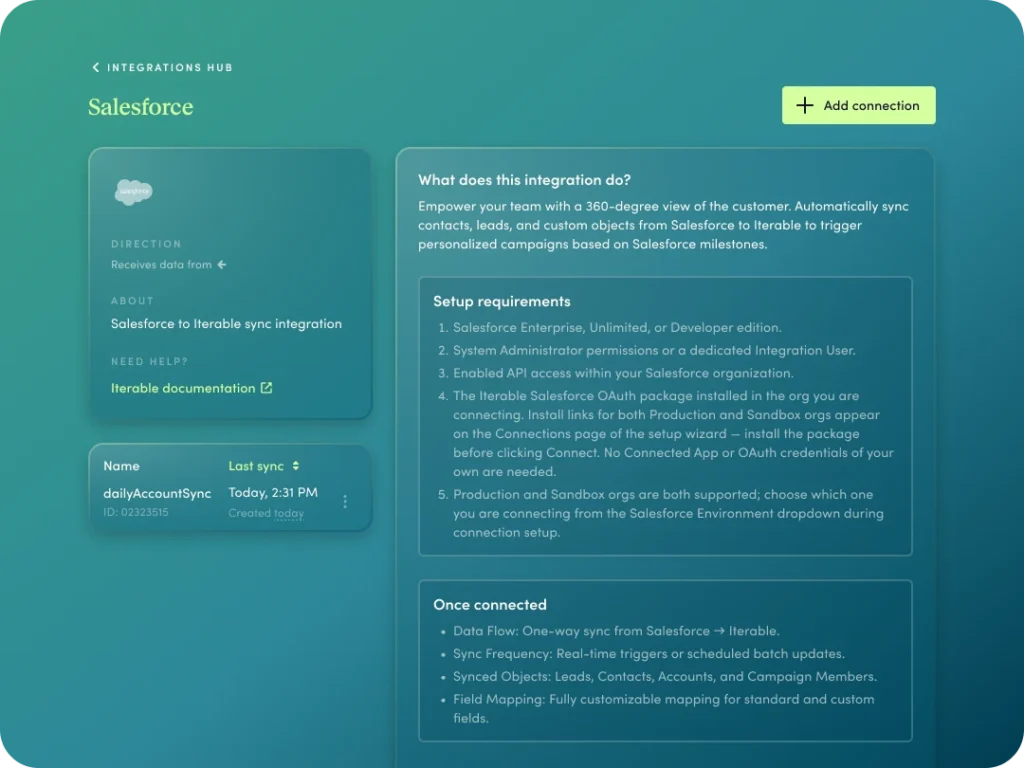
Salesforce Sync creates a first-party bridge between CRM and customer engagement data.
The initial release allows teams to bring Salesforce records, including Contacts, Leads, Accounts, Cases, and supported custom objects, into Iterable profiles, events, and Catalogs. Marketers can then use that business context to build audiences, personalize messaging, and trigger relevant journeys without maintaining custom middleware.
Sales and marketing teams work from a more consistent understanding of the customer, while technical teams spend less time building and maintaining one-off syncs.
Build more precise audiences with business context
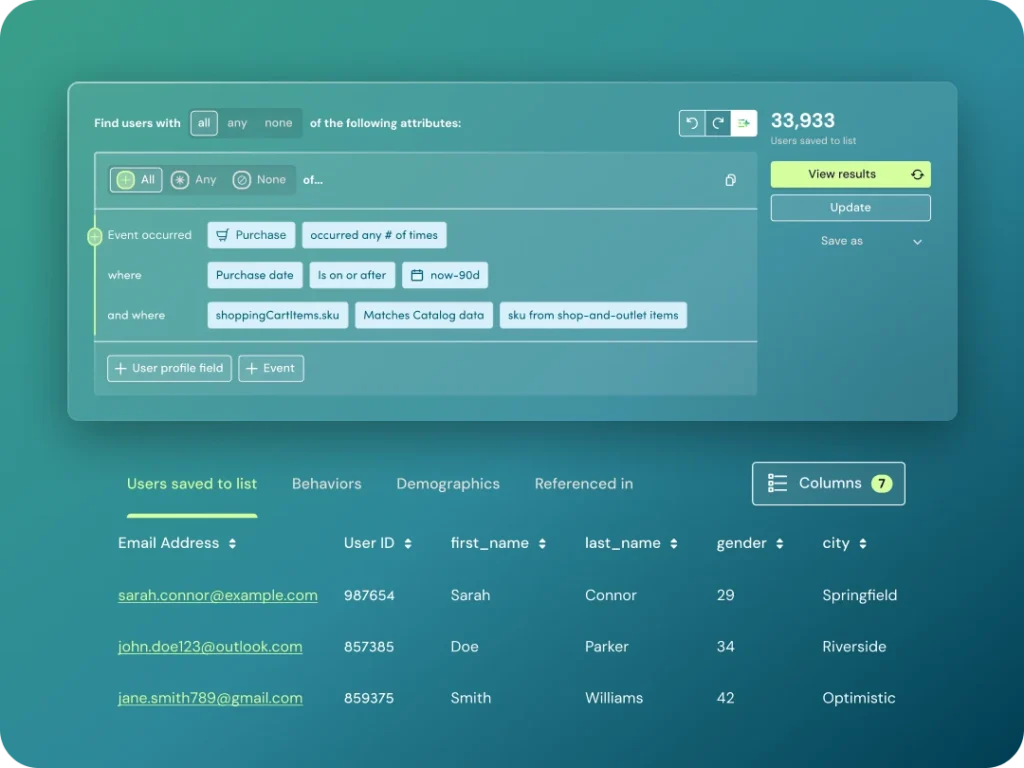
Catalog in Segmentation allows marketers to combine customer and event data with business information stored in Iterable Catalog.
Teams can build audiences using product metadata, account details, locations, subscription information, or other business context without copying every attribute onto individual customer profiles.
That means marketers can create more precise audiences based on what customers bought, which account they belong to, what products are available, or what they may be most likely to want next, with audiences automatically staying up to date as catalog data changes.
Bring live business data into every journey
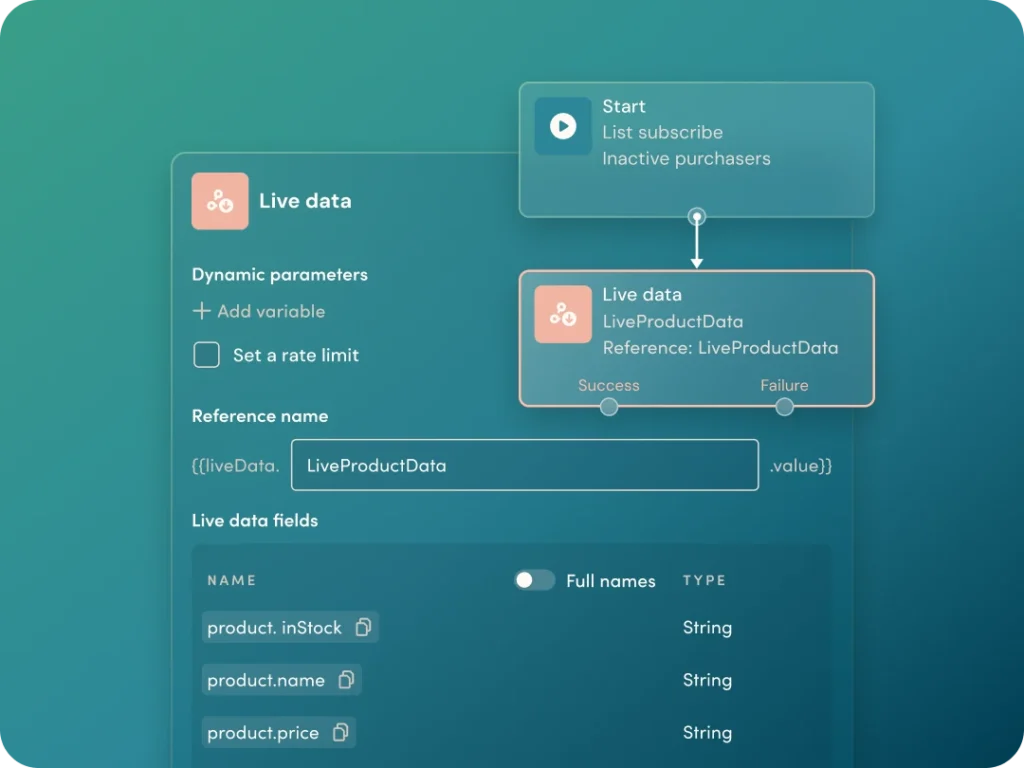
Journeys Live Data brings current signals from external systems directly into a customer journey at the point it is needed.
Marketers can securely access real-time data, so as pricing, inventory, or product availability changes ,they can use the latest information to personalize messages or determine the next journey path.. Experiences reflect what is true when the interaction happens, not what was true when the campaign was created.
2. Make every mobile interaction count
Customers expect more than static notifications. They want interactions that are useful, responsive, and easy to act on.
But traditional mobile messaging often limits what brands can deliver. Siloed channels create disjointed and static experiences.
SMS lacks rich interactivity, email competes in an increasingly crowded inbox, and third-party channel tools separate conversations from the customer data and journeys that should guide them.
Iterable turns connected context into richer mobile experiences that help customers browse, respond, and take action within the conversation.
Create rich, interactive mobile experiences
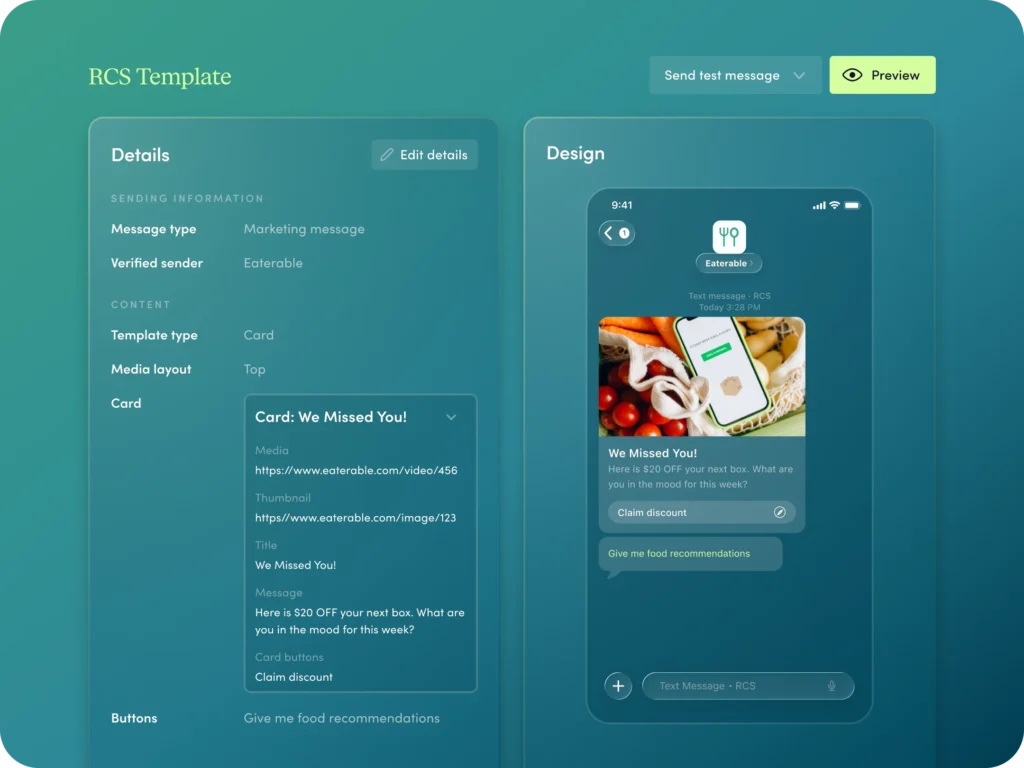
Rich Communication Services (RCS) brings verified, branded, and interactive mobile experiences into Iterable.
Teams can create messages with rich media, videos, carousels, suggested replies, and calls to action, then orchestrate those experiences alongside other channels in a customer journey.
RCS allows marketers to create app-like experiences within the native messaging inbox, making it easier for customers to discover content, complete onboarding, explore products, or move toward a purchase without downloading another app.
Extend connected conversations through WhatsApp
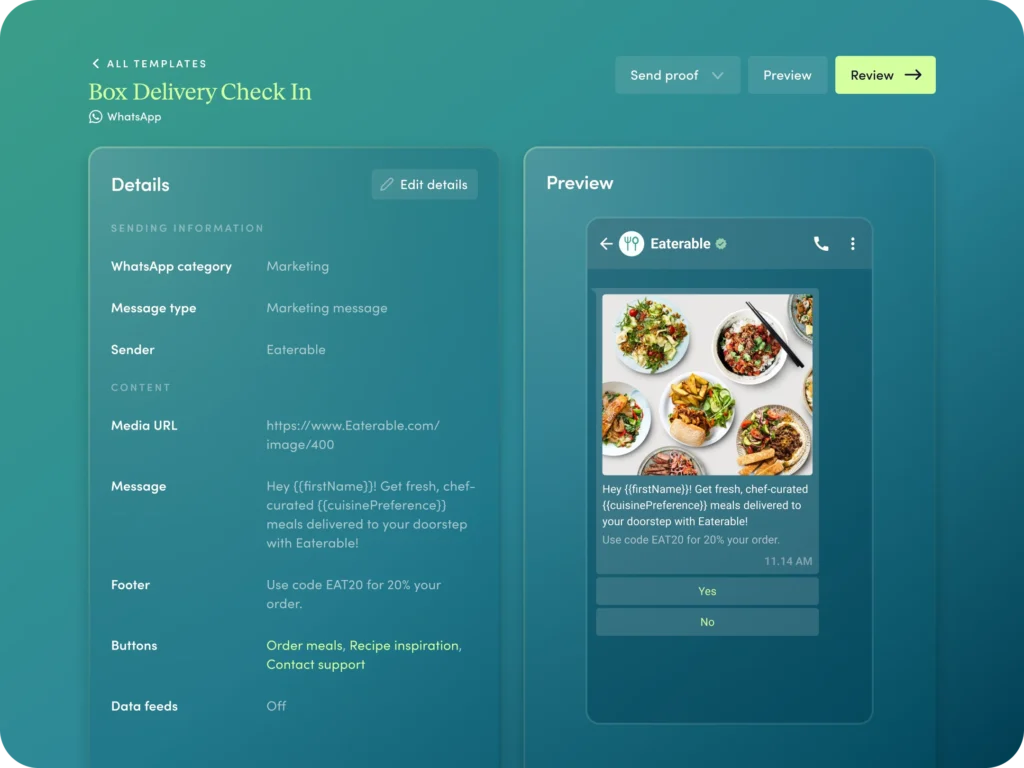
WhatsApp allows marketers to connect with customers outside of US markets through a channel they already know and use, while keeping engagement connected to the rest of the customer journey.
Teams can build personalized WhatsApp campaigns and journeys using rich media, calls to action, quick replies, and real-time customer data. Because WhatsApp operates within Iterable, marketers can coordinate it with email, SMS, push, and other channels using the same customer profile and behavioral signals.
WhatsApp is currently available in the Iterable platform
3. Turn customer interactions into intelligence
Most marketing systems treat a customer response, campaign result, or performance alert as the end of an interaction.
Marketers are told that something happened, but they still have to determine why it happened, what it means, and what to do next. That leads to more dashboard searches, manual investigation, and reactive work.
Iterable turns customer and campaign activity into intelligence marketers can use. Nova surfaces what matters, explains what changed, and learns from each interaction, building intelligence over time so every decision and customer experience can be smarter than the last.
Know what happened and what to do next
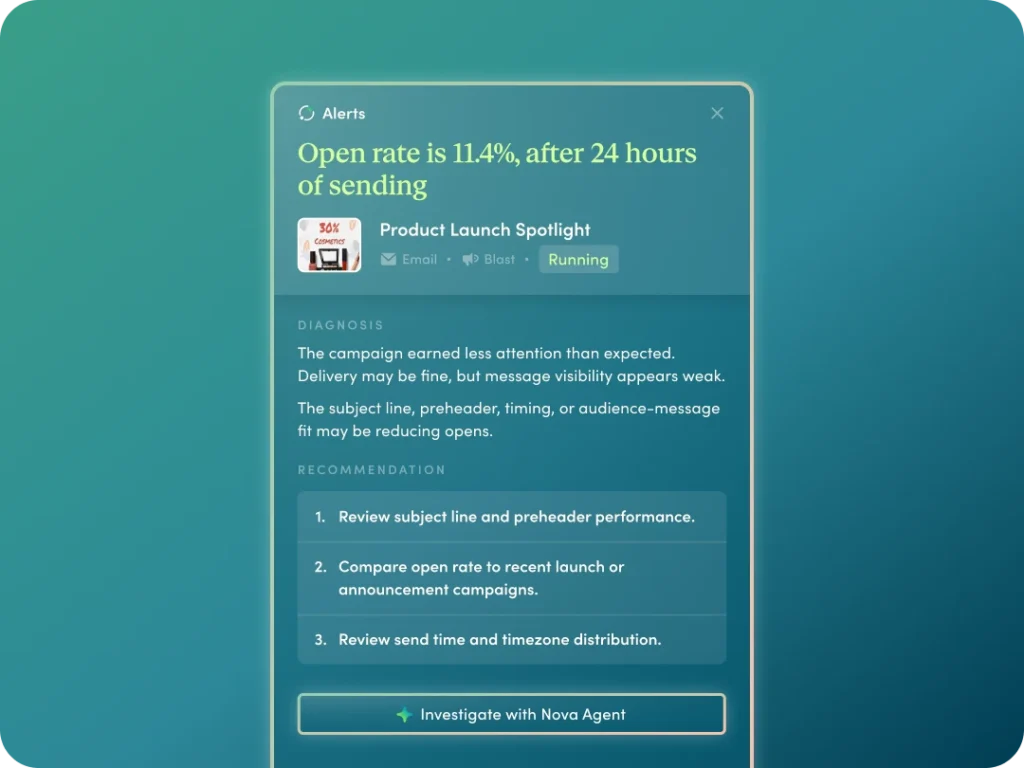
Monitoring Agent help marketers catch emerging issues before they turn into bigger performance problems.
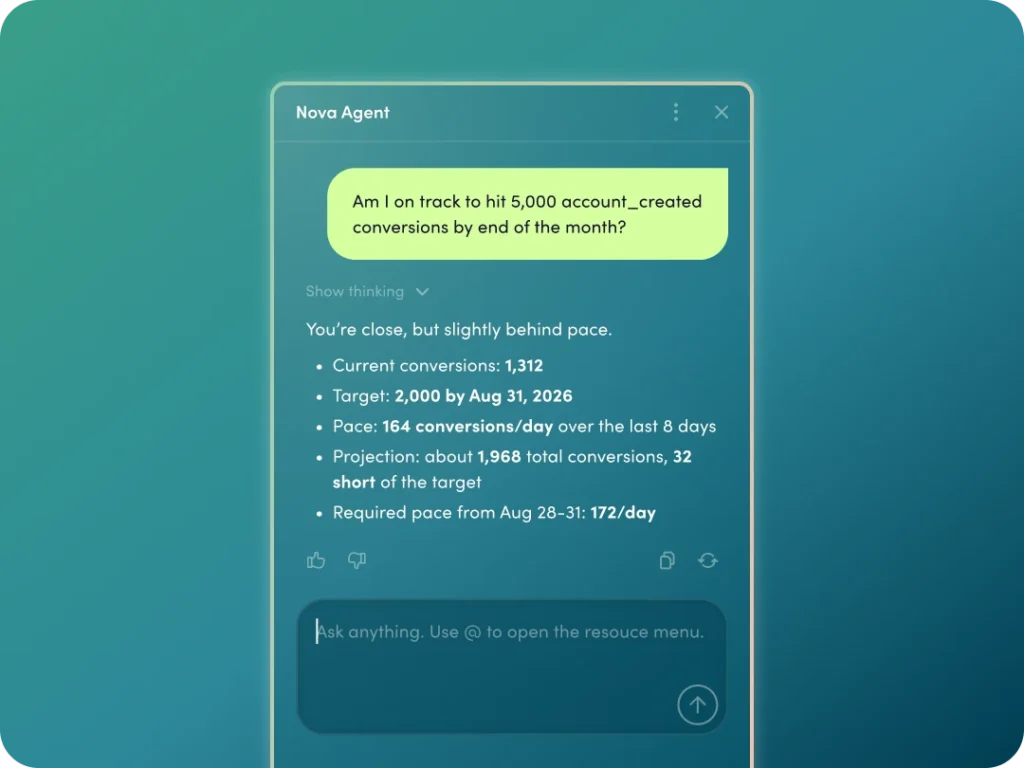
Instead of simply reporting that a metric changed, Monitoring Agent surfaces early signals, explains what happened and why it matters, and recommends the action most likely to improve performance. Marketers can open a prepared investigation and execution plan in Nova Agent, review the recommendation, make changes, and approve the final action.
The marketer stays in control, while Monitoring Agent does the work to identify issues early, diagnose what is driving them, and prepare the next step.
Monitoring Agent will be rolling-out to eligible Iterable accounts this fall.
See the full story behind performance
With this Fall’s enhancements, Analytics Agent expands beyond individual campaign reporting to provide a more complete and reliable view of marketing performance.
Marketers can now analyze results across campaigns, channels, labels, journeys, conversions,and all within one conversation. Cleaner engagement metrics help reduce distortion from automated activity, while comparisons, rankings, charts, and trend analysis make it easier to identify what is driving results.
Instead of piecing together reports or waiting for analyst support, teams can investigate performance and find opportunities to improve it directly within Iterable.
Turn every message into a smarter conversation
Nova Conversations turns mobile messages into intelligent conversations that build on customer context.
Rather than treating every response as a new interaction, Nova can use what the customer has already shared to guide the conversation toward the next best outcome. That might be completing a purchase, finding relevant content, booking an appointment, or resolving a support need.
As customers engage, their responses add new context that can make future interactions more personalized and effective.
Nova Conversations will have a private beta this October.
See what’s new in action
This release connects data, channels, and intelligence into one system that builds a richer understanding of each customer with every interaction. As that context compounds over time, each experience can build on the last and make the next one smarter.
Join our Fall Launch webinar to see how it works.
We’ll walk through Iterable’s latest product innovations and show how connected context helps teams create more relevant experiences and turn customer interactions into intelligence they can act on.
See everything included in the full Fall release notes or What’s New web page.
FAQs
1. What does connected context mean in Iterable?
Connected context means carrying customer and business understanding across systems, channels, and interactions. Iterable brings CRM data, behavioral signals, Catalog information, live external data, and channel engagement into the workflows where marketers build audiences and experiences. Each interaction can begin with what the brand has already learned rather than starting from an incomplete customer profile.
2. How does Iterable create more interactive mobile experiences?
Iterable brings RCS Business Messaging into the same platform marketers use to build cross-channel campaigns and journeys. Teams can use rich media, carousels, quick replies, calls to action, personalization, and real-time behavior to create mobile conversations that help customers take action without leaving the messaging experience.
3. How does Iterable keep customer experiences relevant as context changes?
Iterable keeps customer experiences relevant by bringing current customer, business, and engagement data into the workflows where marketers build audiences and journeys. As customer behavior, product availability, account information, or other context changes, marketers can use those signals to adapt targeting, personalization, and journey paths. This helps experiences reflect what is true now while building on what Iterable has already learned about each customer.