
Building a high-impact audience segment often requires more than customer data alone.
Marketers may know what a customer bought, viewed, or engaged with. But there’s more to those interactions than the action itself. Product details, location attributes, or account information can add valuable business context that customer data alone can’t provide.
Much of that context already lives in Iterable Catalog, where marketers can put that business data to work to personalize what each customer sees. Teams had to duplicate it on customer profiles, adding more data to maintain, with no clear view of who would actually qualify until send time, leading to unexpected skips. Catalog in Segmentation changes that.
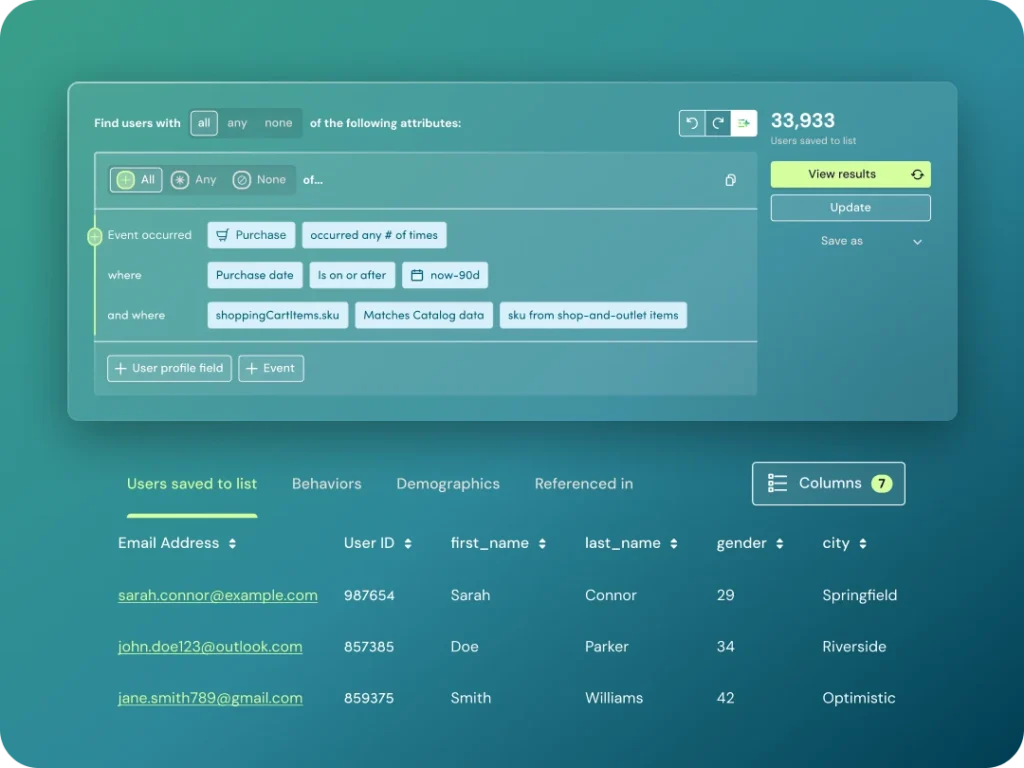
Now marketers can combine customer data and Catalog data directly in audience creation, helping them build richer audiences, reduce duplicate data across customer profiles, and keep targeting current as Catalog data changes.
Build richer, more relevant audiences
Customer behavior tells marketers a lot, but business context can make that data much more useful for targeting. With Catalog in Segmentation, marketers can combine customer profile data with related Catalog data in a single segmentation query.
Now, attributes such as product category, location, or account details can be included in audience criteria. For example, marketers could target customers based on product attributes, accounts approaching a trial expiration, or attributes of a particular location.
Keep business data where it belongs
More targeting flexibility shouldn’t mean adding more data to every customer profile.
Catalog in Segmentation lets marketers use business data directly from Catalog when defining an audience, without duplicating that information across customer profiles just to make it available for segmentation.
That means less profile bloat and ongoing data maintenance, giving marketers a cleaner, more scalable way to manage the data behind audience targeting.
Keep audiences current and launch with confidence
Audiences shouldn’t require manual rebuilding every time business data changes.
For recurring campaigns, Scheduled Lists automatically refresh audiences as Catalog data changes, reducing the manual work required to keep them current. Marketers can also see which customers match Catalog criteria during audience creation, helping reduce unexpected send skips and giving marketers greater confidence before launch.
Put more catalog data to work
Catalog data already provides valuable context for personalization. With Catalog in Segmentation, marketers can put that same data to work in audience targeting, creating a more connected approach to deciding both what customers see and who receives a campaign.
Ready to put Catalog data to work across personalization and audience targeting? Book a demo today or join our Fall Launch Webinar on October 1 to see it in action.
FAQ
Do I need Iterable Catalog to use Catalog in Segmentation?
Catalog in Segmentation requires Iterable Catalog, which is available as a paid add-on. For more details on pricing and packaging, reach out to an Iterable account representative today.
Do I need to add Catalog data to customer profiles?
No. Marketers can use Catalog metadata for segmentation without recreating that data across customer profiles. This helps reduce profile bloat and ongoing data maintenance while still providing the business context needed to build more relevant audiences.
What kind of business data can I use from Catalog?
Catalog can store business data such as products, services, locations, and other information that marketers can use for personalization and targeting. With Catalog in Segmentation, that data can also inform audience creation alongside customer profile data.