
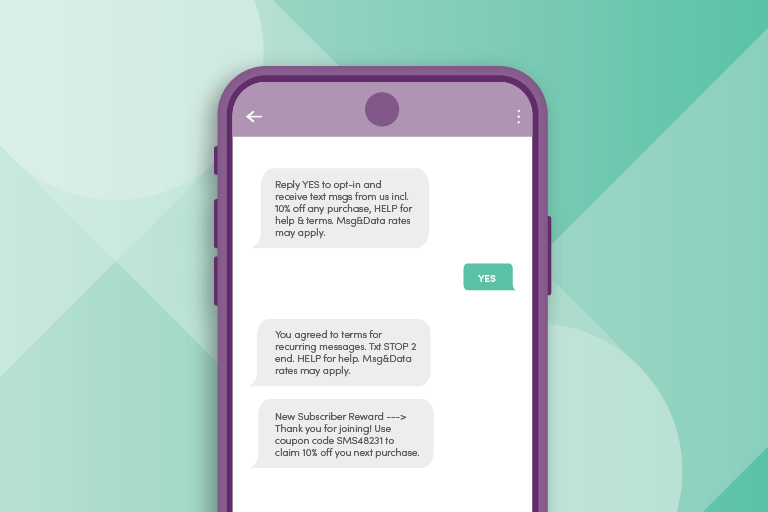
Let’s talk texting. We all know it, we all do it. Whether you’re on a million “group texts” or just checking in on your mom, everyone texts. Short Message Service (SMS) is the protocol behind texting and provides an easy, fast, informal way to connect with people, regardless of location. With all of these benefits, it’s no shock that brands are hopping on the SMS bandwagon and using it as a marketing channel. But how?
Texts are both urgent and personal—they’re a one-on-one conversation. Brands entering the SMS marketing realm need to tread lightly to not only begin texting a customer, but to stay in their good graces. In part one of this crash course in SMS marketing, we’ll review specifically opt-in and opt-out requirements and why they’re so important for your overall SMS marketing strategy.
Opting in
We’ve got to start our SMS marketing journey somewhere, and there’s no better place to start than at the beginning: opting in. Unlike with other forms of marketing that often inundate users with unsolicited messages, for brands to reach customers via SMS, the customer has to opt-in. They need to explicitly say they are open to receiving SMS messages from your brand for your brand to be able to use this as a marketing channel.
It’s not just a light suggestion either. It’s the law. “The TCPA (Telephone Consumer Protection Act) explicitly states that you must get consent—in writing—before sending commercial text messages to any customer. The TCPA helps protect consumers from robotexts and spam.”
Legal requirements often create notions of legalese, fine print, and jargon. But, just because your brand has to abide by the legal requirements of SMS marketing, doesn’t mean your customer experience needs to be bland.
Opt-Ins Open Doors
To encourage opt-in, brands have—in a back-to-basics kind of way—started offering rewards in exchange for opting in. For example, some brands offer coupons for signing up to receive emails, then tack on an additional coupon once they sign up for SMS. Other brands may promote SMS opt-ins in store by granting membership to a rewards program once the customer has texted a number to opt in.
While opting in opens doors to a new communication channel, you have to be incredibly strategic in how you use SMS messaging going forward. Texts are often used for urgent, time-sensitive messages, so the type of marketing message you send needs to match the channel you choose. The customer also needs to see value in staying connected via this channel because without that value, you could see inflated opt-in rates and, shortly after, high opt-out rates.
Opting out
Just as important as requiring customers to opt in to receive your SMS marketing messaging, is giving them a way to opt out. Brands need to give customers an easy way to stop receiving marketing SMS messages. Similar to the CAN-SPAM Act, which requires brands to give customers a clear path to unsubscribe from marketing emails, the TCPA requires you to send opt-out instructions upon sign-up and every month following sign-up. All customers should be able to opt out instantly by simply replying to the message.
U.S. businesses must follow even more specific regulations when running SMS marketing campaigns, as laid out by the Cellular Telecommunications and Internet Association (CTIA). Under their regulations, customers must be able to opt out of any messaging campaign by using any of the following keywords: STOP, END, CANCEL, UNSUBSCRIBE, and QUIT.
Opt-Outs Build Trust
As a brand looking to communicate with customers, offering opt-out options can seem counter-intuitive in the effort towards building stronger relationships. However, providing an opt-out builds trust with such a personal marketing channel by giving the customer control. But, because of said control, you need to be sure that your brand’s messaging is engaging customers, especially if the customer was enticed by a discount to opt in.
Being wise about how your brand uses SMS as a marketing channel can also help protect your brand’s reputation, equity, and ability to use additional marketing channels. For example, say a customer opts in because you’ve offered them a 10% off coupon on their first purchase if they opt-in to receive texts. You then send a text message to them twice a day for the next week—with no response from the customer. Without offering an easy way to opt-out, your new customer may start to get frustrated with your brand. Eventually, they may avoid your brand altogether—unsubscribing from all marketing channels. But, if you provide an easy opt-out, it reduces friction for the customer and increases the likelihood they’ll stay connected via other marketing channels.
When using SMS marketing, there’s potential to learn a lot about customer preferences from the way they interact with your messages. But, like all marketing channels, SMS needs to be used in a way the customer prefers—if they prefer SMS at all.
Just the Beginning of SMS Marketing
Customers today expect marketing individualization. Whether or not you meet customer expectations can be the determining factor between a positive or negative brand experience. And, when it comes to SMS marketing, providing ways for customers to opt in and out is not only the law, it’s the base level of a unique customer experience. Be sure your brand sets clear expectations with the customer about how and why your brand is using SMS. Every customer is different and being able to not only understand those differences, but respect them, is crucial for building long-lasting relationships and, ultimately, increasing lifetime value.
But remember, this is just the tip of the SMS iceberg. In the rest of our SMS Marketing 101 series, we’ll be covering a variety of strategies and techniques you can apply to your marketing messages.
Already an Iterable customer? Reach out to your CSM to learn more about Iterable’s Strategic Services offerings.
Not a customer yet but curious about how Iterable can enable your brand’s SMS marketing strategy? Schedule a demo today.