




























Marketing today requires more decisions than ever across channels, timing, and message frequency. But too often, those decisions come down to guesswork.
Nova Decisioning is Iterable’s AI-powered decisioning layer that helps eliminate the guesswork. It brings intelligent, data-driven decisions directly into marketers workflows, so they can make more data-driven decisions about how, when, and where to engage each customer. By learning from real customer behavior and engagement patterns, Nova Decisioning automatically adapts campaigns to reach people when they’re most likely to respond.
This transforms how teams work – from a series of educated guesses to a simpler, more effective way of working. For marketers, it means fewer manual decisions, less complexity, and more consistent, relevant customer experiences as programs scale.
Learn more about Iterable’s AI and Agentic Intelligence here.
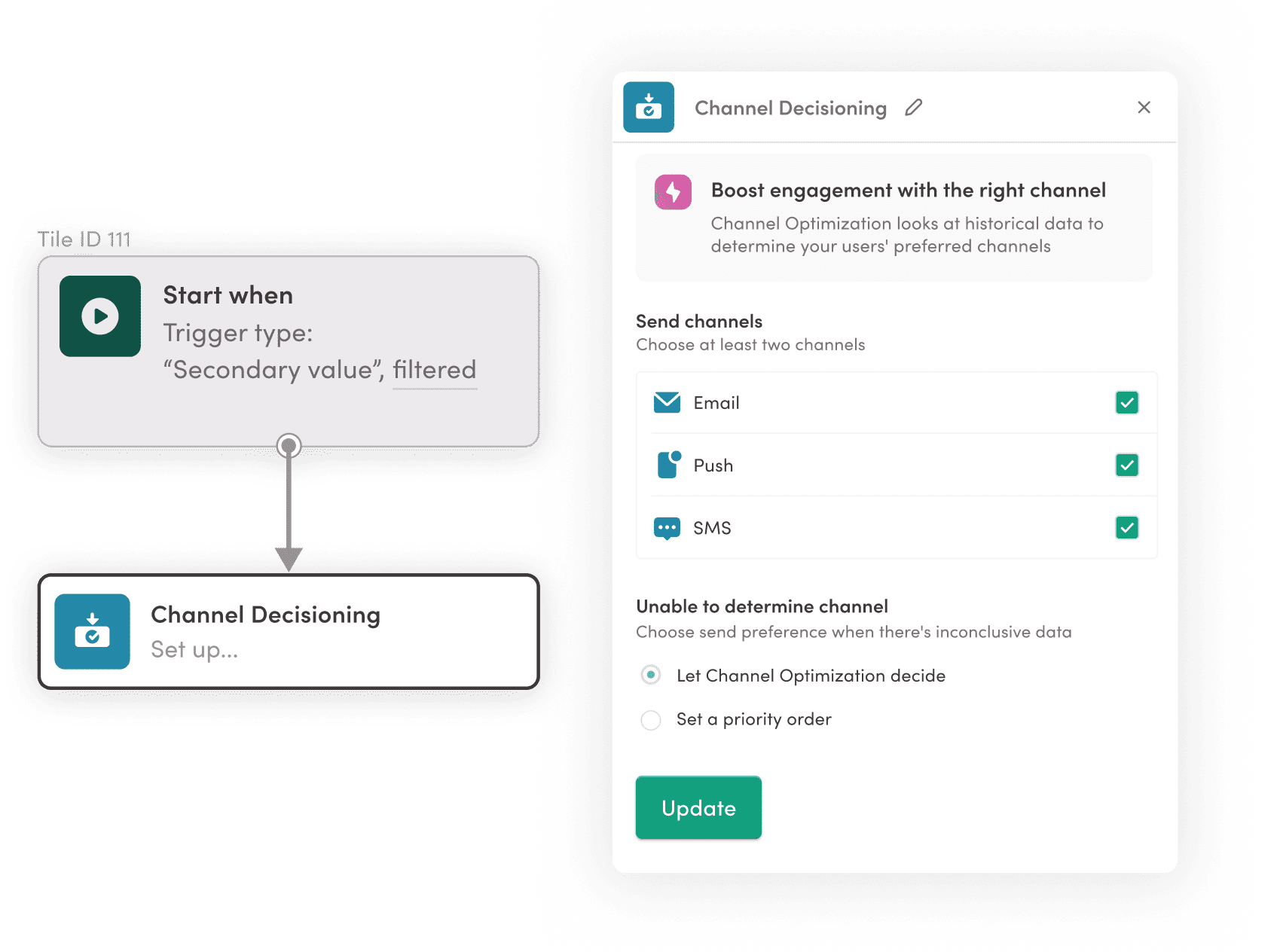
Channel Decisioning
Reach customers on the channel they’re most likely to engage with.
A notification sent through the wrong channel might never be seen—undermining engagement when timing matters most.
What is Channel Decisioning?
Marketers often have to guess which channel will drive engagement. Instead of manually selecting email, push, or SMS for every campaign, Channel Decisioning predicts the channel each customer is most likely to respond to and automatically delivers messages there.
For time-sensitive moments, like a back-in-stock alert for a limited item,this helps ensure messages are seen and acted on before it’s too late.
Send Time Decisioning
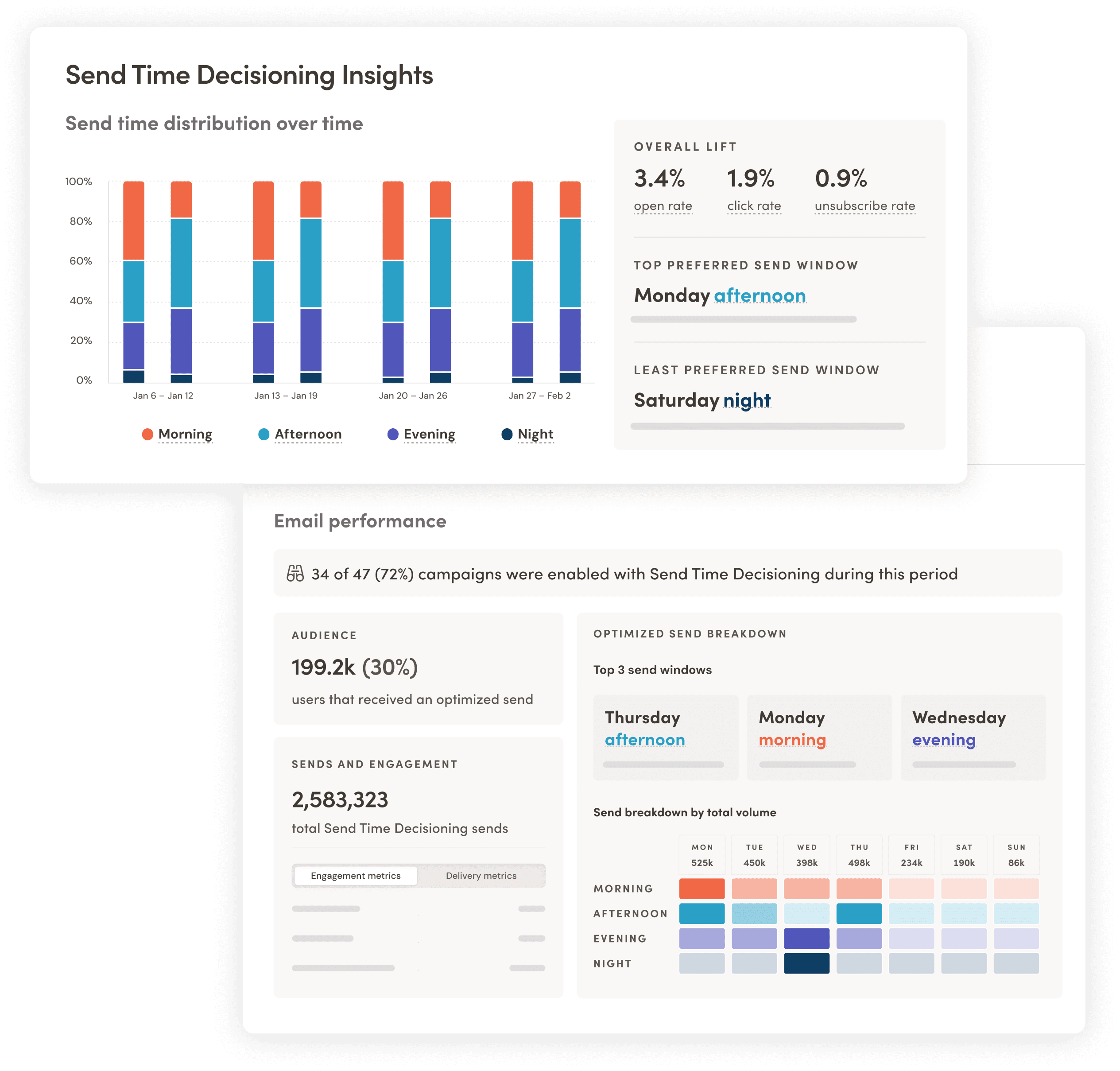
Send messages at the moment customers are most likely to engage.
Many marketers rely on generalized “best send times,” even though engagement patterns vary widely across individuals.
What is Send Time Decisioning?
Send Time Decisioning removes the guesswork by analyzing past engagement to determine when each customer is most likely to respond.
This means messages are automatically sent at individualized times for every recipient, helping improve open rates and engagement without adding operational complexity.
Frequency Decisioning
Personalize how often to engage each customer.
Finding the right messaging cadence is one of lifecycle marketing’s biggest challenges. Too many messages lead to fatigue and unsubscribes, while too few can mean missed engagement opportunities.
What is Frequency Decisioning?
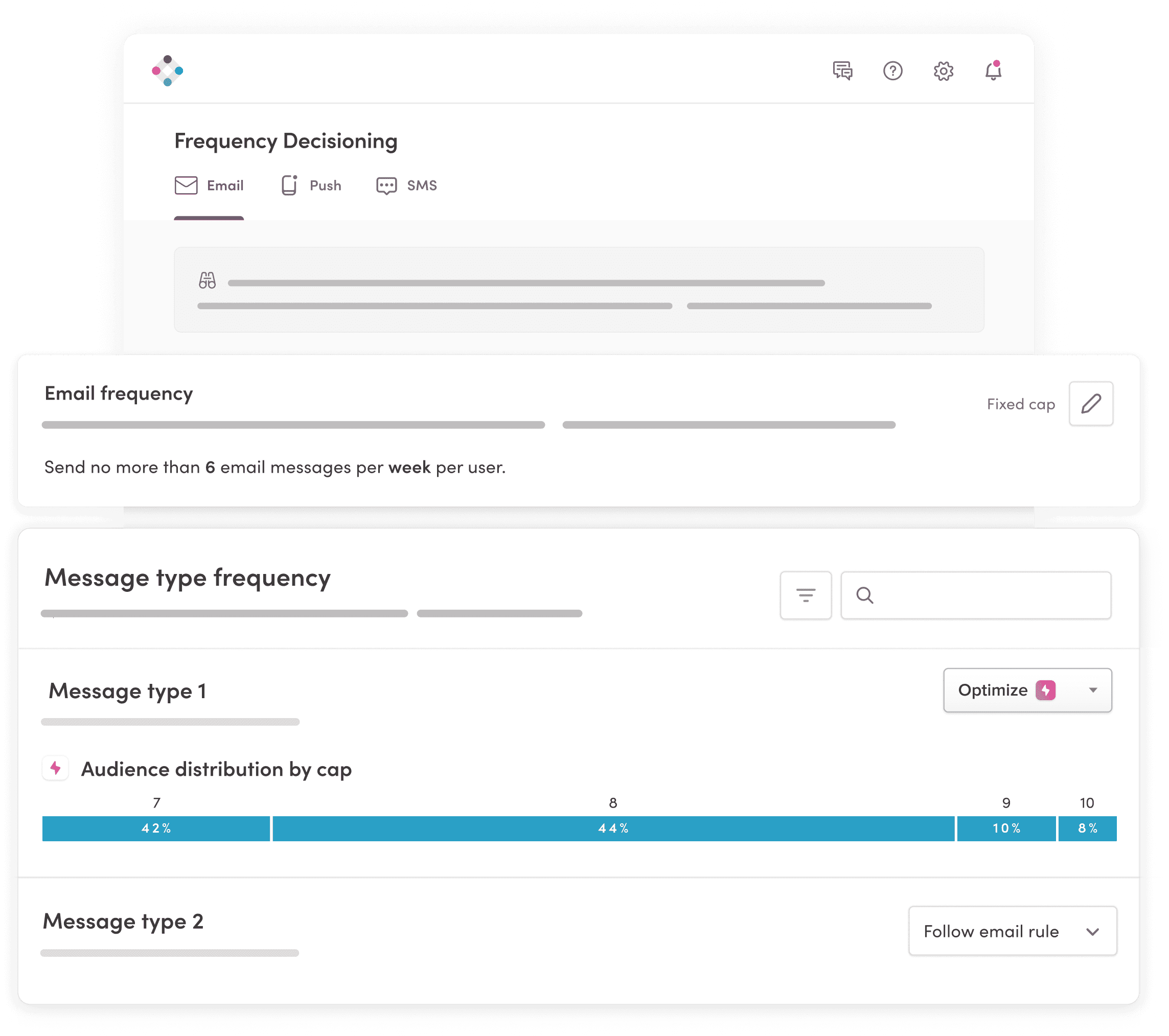
Frequency Decisioning determines the ideal messaging cadence for each customer within the engagement limits you define.
Instead of applying a static cap across your entire audience, you can set a range,such as 1–5 messages per week,and let AI determine the right cadence for each individual, maximizing engagement while minimizing unsubscribe risk.
Smarter Engagement with Nova Decisioning
Together, Channel Decisioning, Send Time Decisioning, and Frequency Decisioning form the foundation of Nova Decisioning—optimizing three of the most important engagement decisions:
- Where to reach customers
- When to send messages
- How often to engage
By unifying these decisions into a single, intelligent framework, marketers can reduce complexity, scale personalization, and deliver more relevant, balanced customer experiences.
That’s Not All: More New This Month.
MCP Server Enhancements
The MCP server now supports 6 AI clients and includes improved setup guidance, stronger security controls, and more flexible API key management, making it easier for teams to integrate AI workflows with Iterable.
Coming Soon: The Next Generation of Nova Agents
Decisioning is just the beginning.
More Nova agents are launching next month, including the Experimentation Agent which is designed to automatically generate, test, and optimize campaign variations that drive the best possible results for your goals, whether it’s engagement, conversion, or anything in between.
Want an early look? Join us at Activate or register for our upcoming webinar to see what’s coming next.
FAQ
1. What is Nova Decisioning in Iterable?
Nova Decisioning is Iterable’s AI-powered decisioning layer that helps marketers determine how, when, and where to engage each customer. By analyzing historical engagement patterns and behavioral signals, it automatically optimizes channel selection, send timing, and messaging cadence within campaign workflows.
2. How is Nova Decisioning different from traditional automation?
Traditional automation relies on predefined rules and fixed schedules. Nova Decisioning adapts in real time based on customer behavior, helping marketers move beyond static workflows to more personalized, data-driven engagement.
3. What’s the difference between Channel, Send Time, and Frequency Decisioning?
Each capability focuses on a different aspect of engagement:
- Channel Decisioning selects the best channel (email, SMS, push) for each user
- Send Time Decisioning determines when a message is most likely to be opened
- Frequency Decisioning personalizes how often each user receives messages
Together, they form Nova Decisioning and optimize the most critical engagement decisions.
4. What types of use cases benefit most from Nova Decisioning?
Nova Decisioning is especially effective for:
- Time-sensitive campaigns (like back-in-stock alerts)
- High-volume sends where engagement varies by user
- Programs where balancing frequency and avoiding fatigue is critical
5. Are Nova Decisioning features available to all plans?
Yes. Channel and Send Time Decisioning are included in all plans. Frequency Decisioning is available to Premium AI Suite users.
See everything that shipped in the full March release notes.