
































Marketing is moving beyond campaign-centric execution toward moment-centric systems designed to detect, decide, and act in real time.
That’s the throughline of our Moments-Based Marketing series, where we brought together marketing and growth leaders from brands like WHOOP, ATG Entertainment, Nextdoor, and Zwift, alongside partners like Hightouch, Movable Ink, Merkle, and and Amplitude to tackle one shared challenge:
How does modern marketing work in a world where customers move faster than our campaign calendars ever could?
What unfolded across five sessions was a cross-disciplinary conversation that moved through each layer of that transformation, from data architecture and journey design to content at scale, AI operationalization, and revenue-critical execution. This is what the shift looks like in practice.
| Explore the full series and rewatch each session here. |
Step 1: Building an Intelligent Data Foundation
If moments-based marketing is the destination, data is the starting point.
Before you can act on moments, you have to recognize them. And that starts with data—the architecture that determines whether your team can detect and respond to change in real time.
In our first session, Aoife O’Driscoll (AVP, Lifecycle Marketing at WHOOP) and Nate Wardwell (Product Evangelist at Hightouch), unpacked what it means to make data actionable.
Most brands say they want real-time marketing. Few are structurally built for it. Real-time readiness requires:
- Live behavioral signals
- Dynamic decisioning
- Contextual intelligence like timezone-aware timing
- The ability to adapt experiences automatically as data updates.
Without that foundation, personalization lags behind the moment it’s meant to capture. So what’s next for data in the age of AI?
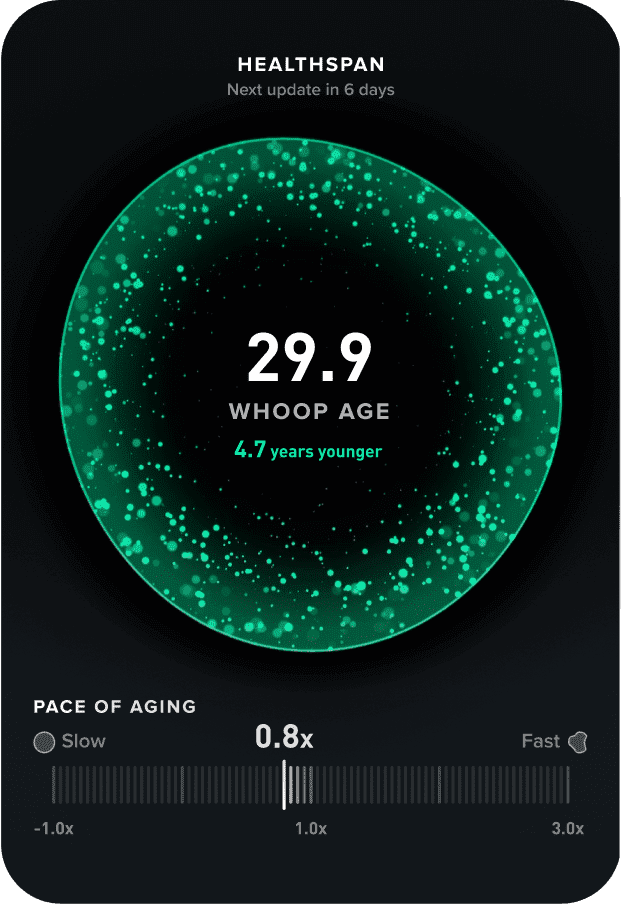
The answer isn’t “more data.” It’s better-connected data. WHOOP put this into practice with its Dynamic Celebration Journey. By syncing live behavioral data into Iterable through a composable, zero-copy architecture, the team triggered milestone-based emails the moment a member’s “WHOOP Age” dropped below their real age — no manual segmentation, no batch delays.
Each message dynamically populated the member’s exact “years younger” result, while non-qualifiers were automatically suppressed.
The impact was measurable: Faster audience creation. Stronger engagement. Incremental revenue lift.

This session reframed data from back-end plumbing to front-line growth engine. But connected data only creates value if your journey infrastructure can act on it, which is exactly where Step 2 begins.
| For a deeper breakdown — including the full conversation and architecture details — watch Step 1 on demand and explore the full recap. |
Step 2: Redesigning Journeys for Real-Time Relevance
A connected data foundation tells you when a moment is happening. The question is whether your journey infrastructure is built to respond or whether it’s still running on campaign logic that fires on a schedule regardless of what customers are doing. That gap between signal and response was the focus of Step 2.
In this session, Mara Cohen (CRM Manager at ATG Entertainment), and Steven Aldrich (Co-founder of Ragnarok) pulled back the curtain on what it actually takes to migrate from static, one-size-fits-all campaigns to adaptive, cross-channel journeys in Iterable. For ATG, the goal was to get people interested in their events and converting faster.
ATG rebuilt key journeys, such as abandoned cart, pre-visit upsells, and loyalty triggers, to respond dynamically to live behavior, venue data, and purchase timing. With cleaner data and guardrails in place, engagement and deliverability improved while campaign launches accelerated.
Steven shared the Ragnarok perspective: CRM transformation is as much about people and processes as it is about platform. Operationalizing change required governance, stakeholder alignment, and a balanced 60/40 migration strategy to preserve continuity while innovating.
But as journeys become more dynamic, a new constraint surfaces: content. You can have the smartest journey logic in the world, and still lose the moment if every variation requires a manual rebuild––enter Step 3.
| Watch the full Step 2 webinar on demand and explore the recap to see how adaptive journeys become performance multipliers. |
Step 3: Scaling Personalization With Modular Content
Adaptive journeys create a content volume problem. The more personalized your logic, the more variations you need. And if each one requires a creative build from scratch, personalization quickly becomes the bottleneck rather than the advantage.
In this session, Betty Rangel (Senior Product Marketing Manager at Movable Ink) joined Iterable to show how brands evolve from static campaigns to living systems built on modular content.
Modular content is like a well-built wardrobe. You don’t design an entirely new outfit every day. You build core pieces once and assemble them based on context. A blazer is a blazer, and what makes it personal is how it’s worn. Similarly, a product tile or hero module is built once, and the data determines how it’s assembled for each customer.
This flexibility depends on three operational foundations:
- Organized asset management
- Reusable building blocks (like product tiles, hero modules, and CTAs)
- A clear taxonomy that tells the system when and how to assemble them
With modularity in place, personalization shifts from being a creative strain to a scalable system. And once content can scale, the question shifts from “can we produce enough variations?” to “are we making the right decisions about which variation to serve?” That’s where AI enters the equation.
| Watch the full Step 3 webinar on demand and explore the recap to see how modular systems turn relevance into repeatable growth. |
Step 4: Putting AI to Work With Human-Led Expertise
By the time we reached Step 4, the foundation was set. Data was unified. Journeys were adaptive. Content was modular. But where does AI fit in, and why do so many teams struggle to get there, even when the intent is clear?
In this session, Shweta Puri (Senior Product Manager of Marketing Technology and AI Ops at Nextdoor) and Erin Kelsh (VP of Messaging Solutions and Innovation at Merkle) addressed a hard truth: AI adoption doesn’t stall because marketers doubt its value. It stalls when teams lack the clean data, shared definitions, and integrated systems required to make AI usable in day-to-day workflows.
Shweta explained why her team focused first on solidifying the fundamentals:
- Clean identity resolution across systems
- Shared definitions of key metrics like “active user”
- Simplified, governed data ingestion pipelines
Only once those are in place can AI outputs be trusted and scaled.
AI amplifies whatever system it enters. Fragmented inputs produce fragmented results, but strong foundations produce compounding gains. AI must operate within human-defined strategic outcomes, brand standards, and governance structure. This allows you to scale it confidently, without a human reviewing every output before it goes out the door.
But once you embed AI responsibly, how do you turn capability into consistent business impact? It all comes together in Step 5.
| Watch the full Step 4 webinar on demand and read the recap to see how brands operationalize AI without overcomplicating it. |
Step 5: Turning Strategy Into Revenue-Critical Action
Data, journeys, content, AI — all of it is infrastructure. Step 5 brought the conversation back to the question infrastructure exists to answer: what drives revenue?
Rachel Kamel (Director of CRM, Zwift) and Tanya Littlefield (VP of Growth and Digital Marketing, Amplitude), introduced a filter for cutting through the noise: revenue-critical moments.
Revenue-critical moments are inflection points, behaviors, and milestones that materially change a customer’s lifetime value, such as seasonal disengagement in a subscription model, feature adoption that drives stickiness, or early churn signals that predict cancellation.
Both speakers stressed how important it is for teams to share a common purpose by connecting lifecycle initiatives to company-wide KPIs through revenue-critical moments. Zwift puts this into practice by matching its lifecycle programs to predictable seasonal behavior. Instead of reacting to churn after it happens, the team plans around usage cycles — focusing on onboarding and habit formation in peak indoor months, then reinforcing value as riders move outdoors.
Amplitude recommends operationalizing around revenue-critical moments through a small set of principles:
- Organize teams around the lifecycle
- Combine data with direct customer insight
- Reuse what already works
- Build shared learning loops
Execution is where lifecycle marketing delivers business value. Successful marketing teams make revenue-critical moments work in their favor.
| Watch the full Step 5 webinar on demand and check out the recap to see how leading brands turn planning into measurable revenue impact. |
This Is What Modern Marketing Looks Like
What these five sessions revealed isn’t a set of discrete tactics. It’s a compounding system.
- Data gives you the signal.
- Journeys let you act on it.
- Modular content lets you act at scale.
- AI accelerates the decisions.
- Revenue-critical moments turn this into measurable business impact
The brands embracing this shift are moving faster with their customers by building infrastructure that responds to behavior in real time with the right message at the right moment.
If you’re ready to put what you’ve learned into practice, download the complete playbook behind this series: The New Era of Moments-Based Marketing: 5 Steps to Evolve Your Marketing Strategy.