
Retargeting is a term we, as marketers, have heard tossed around in a variety of different contexts—ad retargeting, web retargeting, social retargeting, etc. “Retargeting” has evolved to serve as a semi-vague umbrella term for a swath of personalized marketing techniques. So, to understand it a bit better, we’re going to focus on just one (kinda): email retargeting.
According to Campaign Monitor, “email retargeting is a marketing tactic that helps [brands] reintroduce a specific product to a particular audience.” While we agree, we also want to expand on this definition. Retargeting doesn’t necessarily need to be product-related but, instead, should focus more on the customer journey.
You’re probably already somewhat familiar with retargeting via email, so let’s talk about some examples of how you can adapt these to a cross-channel retargeting campaign with your mobile, web, social, and any other channels you have at your disposal.
Email Retargeting in a Cross-Channel Strategy
While email is consistently proven to be a powerful marketing channel, today’s customers expect us to use more than just email. With channels like SMS, push notifications, mobile inbox, and even direct mail available, there are multiple ways to connect customers. The trick, however, is having these channels communicate with one another to create a cohesive experience—regardless of where and how the customer interacts with your brand.
As users interact with your brand, retargeting emails can be triggered to send automatically, without a heavy manual lift. But—and here’s where cross-channel marketing comes into play—these interactions can extend beyond just those completed on your website. Users can interact with your different marketing channels—app, mobile site, direct mail, etc.—and, based on those interactions, you can send the same types of automated retargeting emails.
Let’s revisit some examples of retargeting emails with the cross-channel marketing lens.
Completing a User Profile
As a user goes through your onboarding process, they may be asked to fill out their preferences as part of a user profile. This step could get skipped as users often want to jump right into using a product. (Think about any streaming service asking you to select shows you like when you first create your account.) But, their online profile is important for your brand because it holds valuable information that could inform future marketing messages.
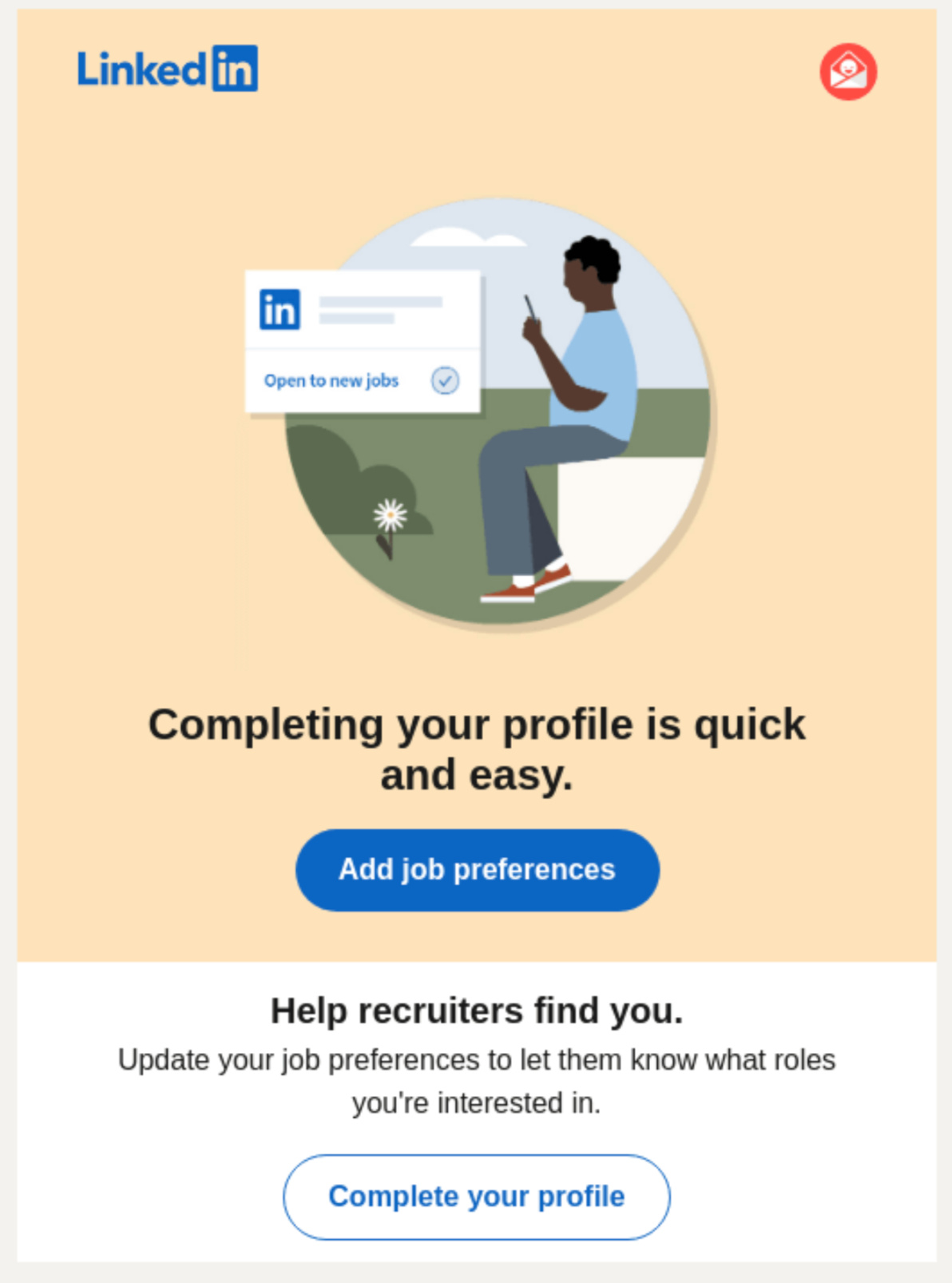
With centralized data and the ability to track the actions they’ve completed on various marketing channels, you can see that the customer not only hasn’t completed their profile, but they haven’t downloaded your mobile app yet either. After a certain amount of time has passed, you can send a retargeting email encouraging them to download the app and fill out their profile. The email can feature a link to the app store, making it easy to access if the user is on their phone. If they download the app, but still don’t complete their profile, you can send additional emails or mobile inbox messages that link the user directly to the profile setup page within the app.
Abandoned Cart
A more traditional example of email retargeting is the abandoned cart email. A user could be shopping on your retail website, add a shirt to their online cart, but then leave the site without purchasing said shirt. As soon as they left your site, a retargeting email could be triggered to send, featuring the shirt they left behind. To sweeten the deal and entice the user to make the purchase, some brands may also offer a discount code or free shipping.
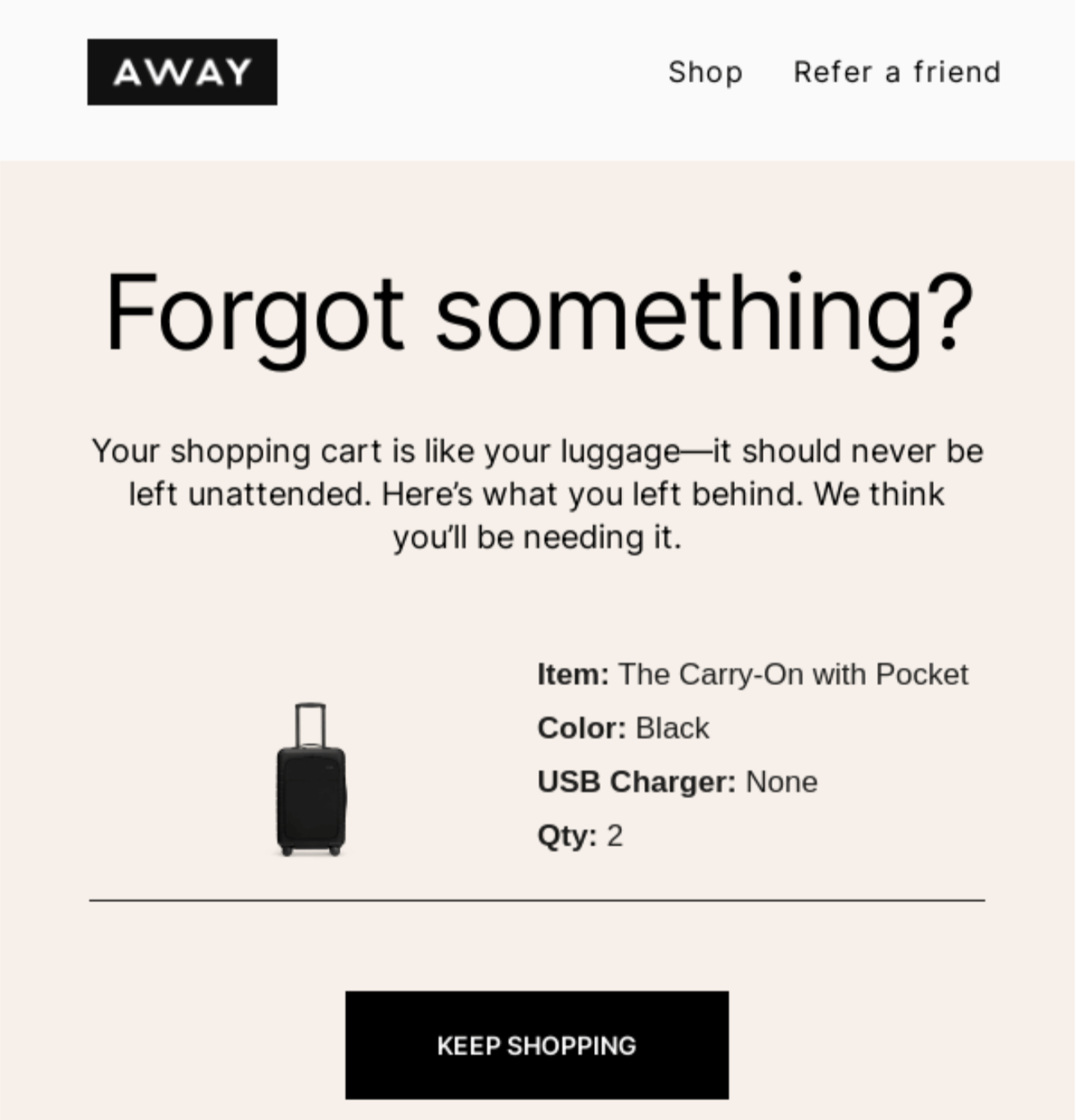
What if the shopper is on your mobile app or mobile site? With a cross-channel strategy in place, your brand can recognize this user, regardless of where or how they interact with your brand, and send communications based on those interactions.
For example, if a user adds a product to their cart on your mobile site but doesn’t check out, you can send an abandoned cart retargeting email that includes a deep link to their shopping cart. Then, once they arrive on your site you could send an in-browser message or SMS featuring a limited-time coupon code.
From the customer’s perspective, you’ve now created a holistic experience where, regardless of the channel they use, they’re recognized by your brand as the same user with a cohesive recognition of their behavior and messaged as such.
Retargeting is a Tool for Individualization
Recognizing every customer as an individual is critical when designing a cross-channel strategy. Sending the same broad messages across multiple channels to every customer isn’t going to move the needle. But, using every channel to connect with the customer in ways that make sense to them will not only increase the likelihood of engagement, but build trust as well.
Email retargeting is a tool that can help develop your brand’s ability to connect with each user as an individual. Like we said earlier, email retargeting shouldn’t be based on products, but where each customer is on their unique journey.
To learn more about how Iterable’s automation features can help you build out your cross-channel email retargeting strategy, schedule a demo today.