

Marketing emails can be triggered based on a wide variety of user information. For example, maybe your brand sends an email to customers on their birthdays. Or, maybe your brand takes advantage of location-based email marketing to send messages based on certain geographical events.
Customers’ birthdays don’t change and their location may change every now and then, But what about less-static user information? Customer behavior, for instance, can change day-to-day. Therefore, implementing behavior-based email marketing is crucial for creating a personalized customer experience.
In addition to defining behavior-based email marketing, this article will showcase brands who are absolutely nailing it.
What is Behavior-Based Email Marketing?
Behavior-based email marketing is when brands send automated emails based on certain events or actions a customer takes while interacting with your brand. There are certain actions a customer takes that your brand will want to capitalize on—think: transactional emails. After a customer makes a purchase, an email is automatically triggered that confirms the purchase and provides an order summary.
But, not every customer action requires an automated email. (How annoying would that be for the customer?) You need to be strategic and selective about which customer actions you select to trigger behavior-based email marketing efforts. Let’s take a look at some brands who have chosen a wide array of customer actions to send behavior-based emails.
1. Abandoned Browse Emails
We’ll start with a classic—the abandoned browse. While not as well-known as it’s cousin, the abandoned cart email, the abandoned browse email is a powerful behavior-based email marketing tool to have in your arsenal.
“Browse abandonment emails have an 80.9% higher open rate and 50.5% higher click through rate than traditional emails, while 26% of all browsers that open these emails will click through and return to the site.” – Salecycle
Based on a customer’s activity within your app or site, abandoned browse emails show the customer you’re paying attention to what they’re doing. For example, Lego, a toy company, sent the below abandoned browse email to someone who had looked at the “Luke Skywalker’s Landspeeder” Lego set.
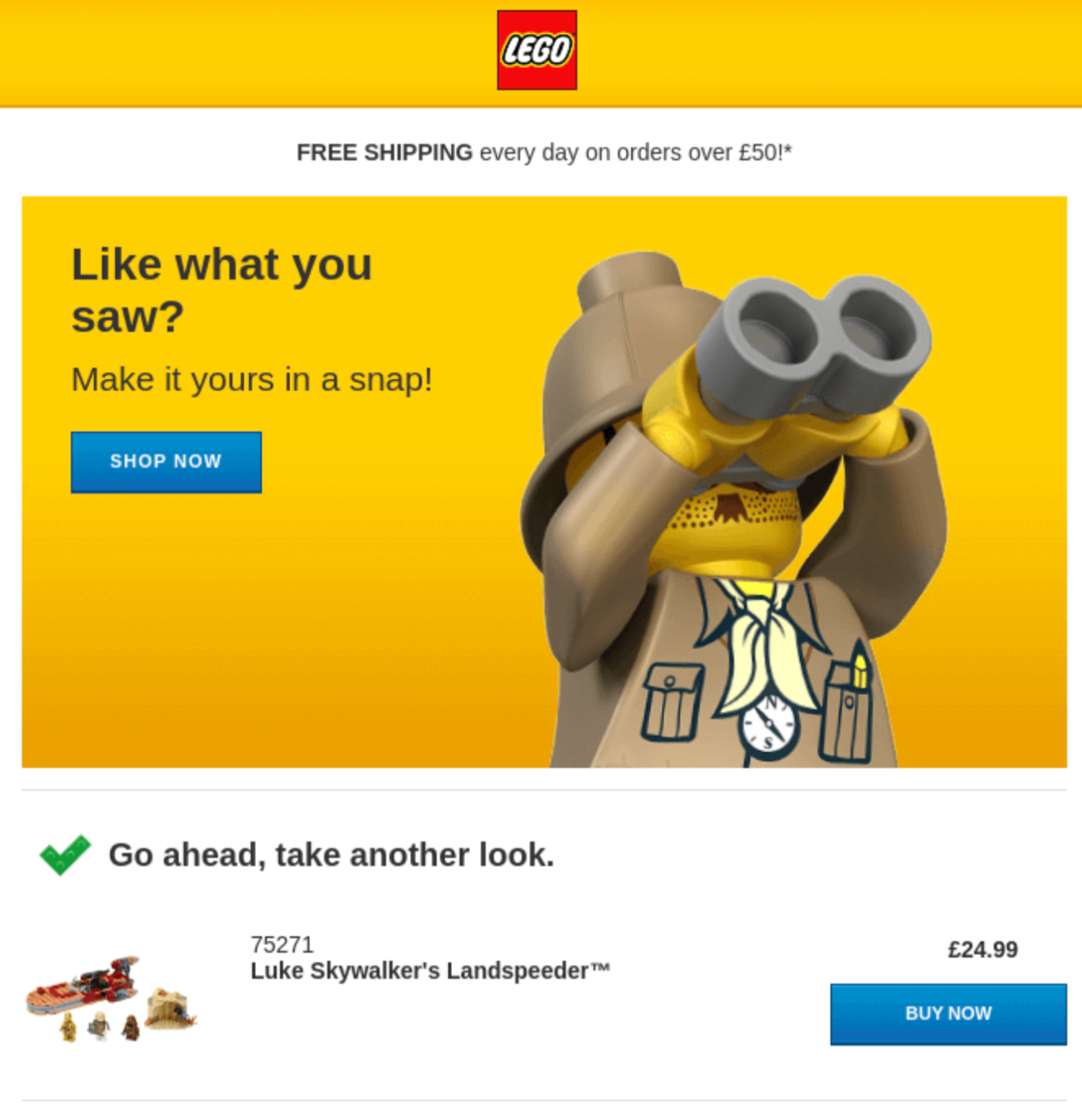
The email features a playful Lego character with binoculars—a nod to browsing—and the subject line “You’ve looked at some great LEGO sets!” It even features a reminder for free shipping for orders above a certain price threshold.
But, the reason this email is a top example of behavior-based email marketing is because of the dynamic content field. After the header image, there’s a field featuring the actual item this customer looked at, the price of the item, and—here’s the kicker—a CTA to “buy now.” This behavior-based email makes the customer’s experience easier and increases the likelihood the customer will interact with Lego.
2. Emails Centered on Preferences
Just like customer behaviors, customer preferences change. But, paying attention to how customers are behaving on your site or in your app should give you a gist of what each customer is into these days. And, because preferences change, preference-centered, behavior-based emails need to be distributed in a timely manner to ensure the customer still likes whatever content you choose to include.
Spotify, a streaming service, compiles customer preferences based on the type of content each customer streams. In the below email, Spotify used behavior-based email marketing to send this listener a list of live shows that they may be interested in, based on their past behavior.

What makes this preference-centered email a top example of behavior-based email marketing? It combines customer behavior and customer location to deliver a hyper-personalized experience. Not only does this email feature “upcoming concerts by artists you love” but it includes “upcoming concerts near you by artists you love.”
Spotify was able to use static customer information—location—and cross-reference it with some of the customer’s frequently listened-to content. By bringing convenience to their customers’ lives, Spotify is increasing the likelihood of engagement.
3. Recaps of User Behavior
We’re all familiar with the emails that recap our activity over the past year, month, week, etc. (Spotify Wrapped, anyone?) While these emails are a very literal interpretation of behavior-based email marketing, the dynamic nature of recap emails makes them a top example. Recap emails are highly personalized—all of the information that is included is specific to the individual recipient. It’s unlikely that any other customer received the exact same email. Plus, with badges and rewards for various accomplished achievements, specific to the individual customer, these emails add a layer of gamification that captures the users’ attention.
The below email from personal fitness tracker, Fitbit, is a recap of the previous week’s activity. This email includes stats like total steps taken, average calories burned per day, and total active minutes. Fitbit can assume that their customer base cares about their wellness, so providing a recap based on each individual user’s behavior aligns with customer needs.
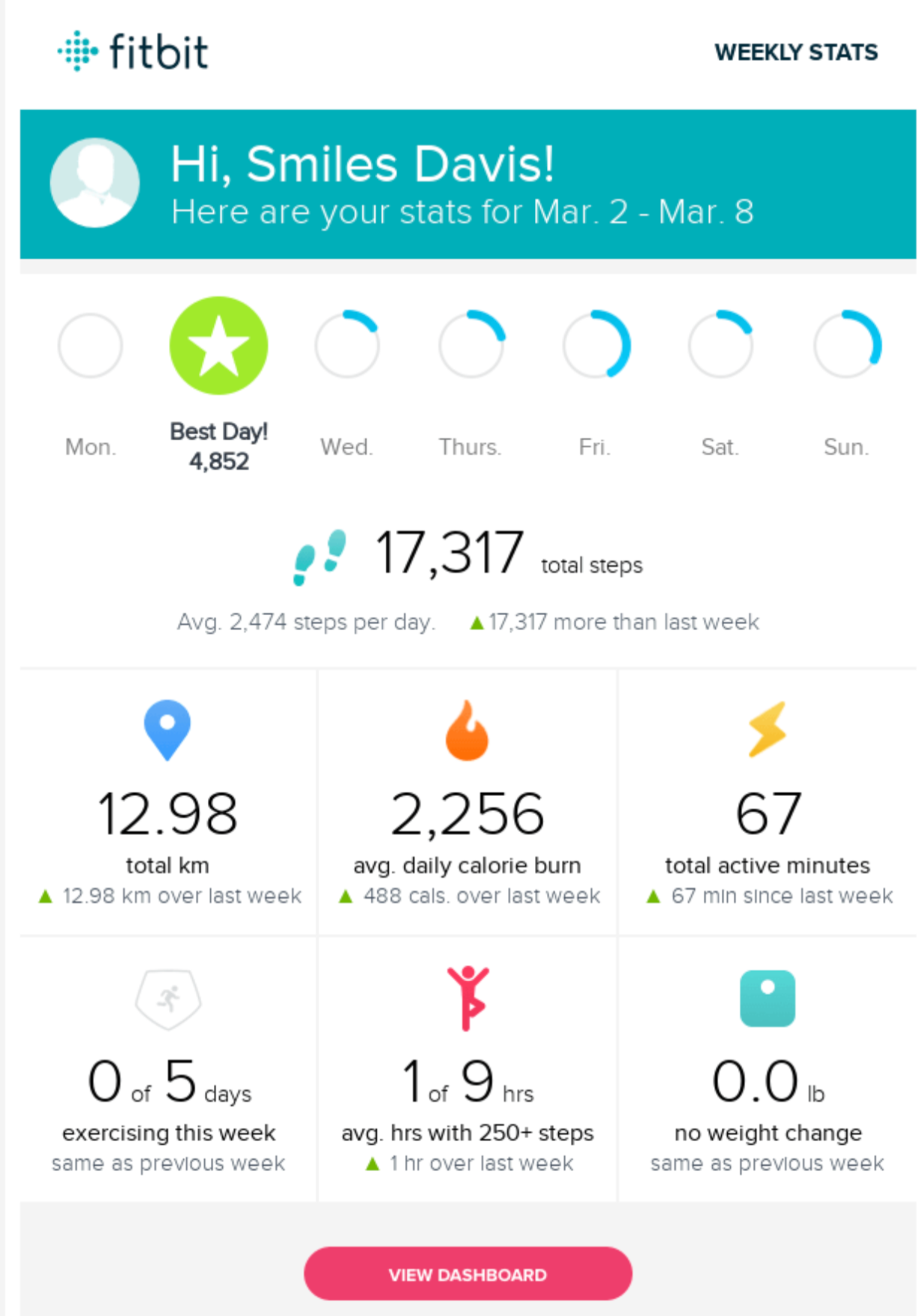
What’s nice about this behavior-based email is that it provides information that the tracker itself doesn’t. While the tracker provides a daily view of metrics, this email gives a bird’s-eye view of metrics, allowing users to compare to the previous week’s email to easily see progress. That’s why this is a top example—it adds value for the user. Adding value promotes user engagement, and that’s really what behavior-based email marketing is all about.
Increasing User Engagement with Behavior-Based Email Marketing
At the end of the day, the goal of any type of email marketing is to increase user engagement. Behavior-based email marketing, however, is an especially powerful approach. According to MarketingSherpa, “39% of marketers found that sending emails automatically based on user behavior was their most effective email marketing strategy.”
Rather than connecting with a customer based on static user information, behavior-based emails connect with users in the moment. They’re sent in real-time, while the customer is interacting with your brand—creating the perfect opportunity for customers to engage. Building a personalized customer experience is all about being where the customer needs you to be. Behavior-based email marketing ensures your brand is where it needs to be to engage with your audience.
To learn more about behavior-based email marketing and how to integrate it into your marketing campaigns today, schedule an Iterable demo today.