

SMS messaging, a.k.a. “texting,” has evolved into a highly personal method of communication. Forget marketing for a second—think about how you use texting day-to-day. It’s a fast, simple way to contact friends and family and stay connected without dedicating time to a phone call. Not only that, you already have your phone with you at all times, so it doesn’t require any additional equipment or effort. It’s instant messaging on-the-go.
The personal and instantaneous nature of SMS messaging is nothing short of a dream for marketers. We now have a channel to connect with customers wherever they are—home, out shopping, on vacation, etc. Plus, because “5 billion people globally send and receive SMS messages,” it’s almost a guarantee that your subscribers will see—and open—the messages you’re sending. In fact, marketing SMS open rates are as high as 98%.
But, adapting this channel for marketing requires finding the sweet spot that results in being helpful rather than annoying or off-putting. We’ve all received those spam texts with links to weight loss supplements or free headphones—yuck. But clearly there’s a reason why customers are opening brands’ SMS messages. This begs the questions: why are personalized SMS messages so effective as part of a marketing strategy?
Create Timely and To-The-Point Content
One of the most appealing aspects of SMS messaging is the message length. Texts are easy-to-digest, dont require scrolling, and often provide a direct link to whatever is being promoted. Plus, because texts get to the point—and fast—they’re often used for more urgent or timely situations. This is where your brand can get creative with personalization.
When crafting a personalized SMS message for your audience, keep your brand tone and voice, but skip the fluffiness. Texts are meant to disseminate information quickly in a way that helps the end user. United Airlines, for example, sends personalized SMS messages that are directly related to the individual’s trip.
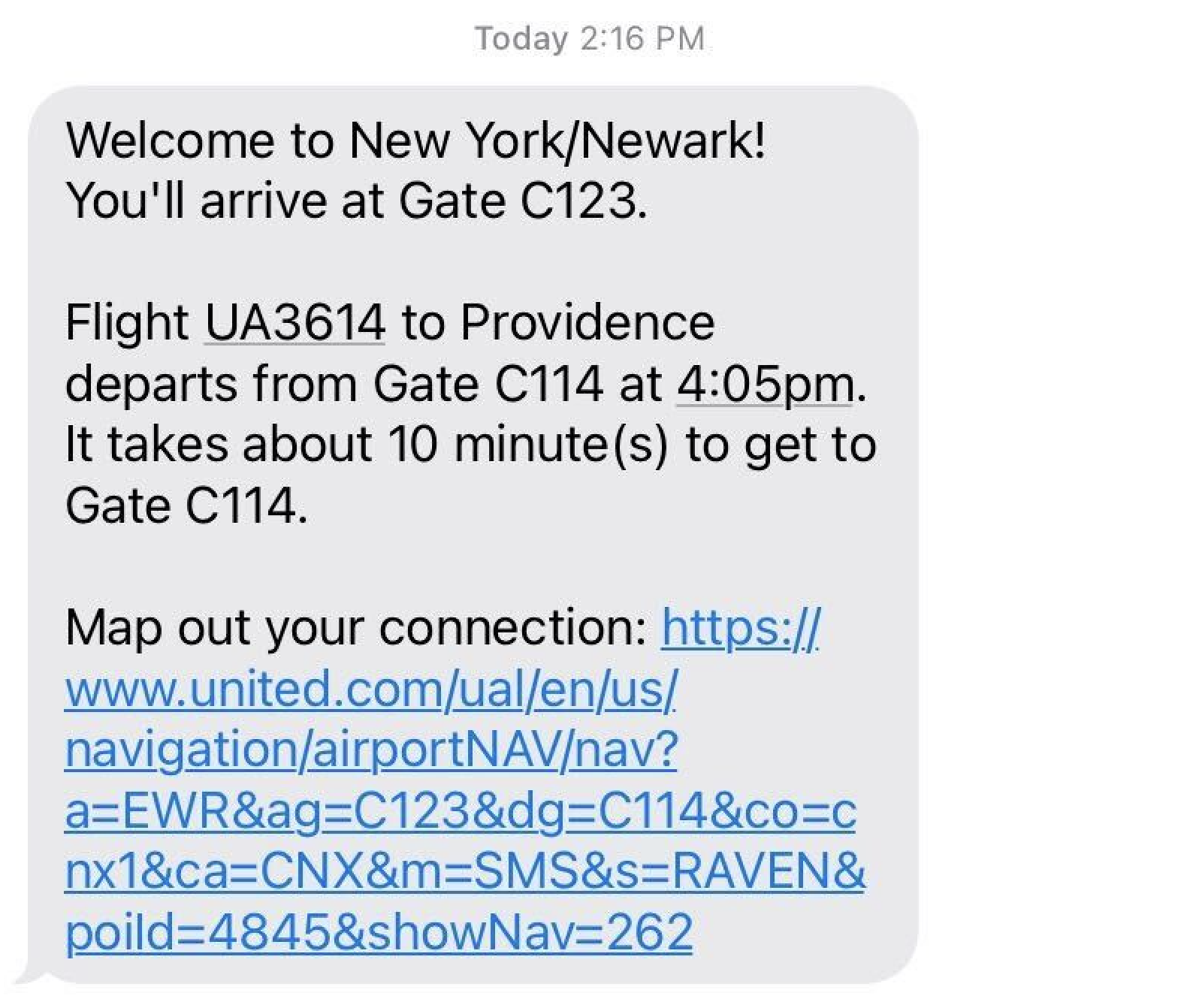
This user booked a trip from San Francisco to Providence, with a connecting flight in Newark. Making a connecting flight is a super stressful aspect of booking trips, and United Airlines set out to ease this customer’s concerns. This text welcomes the customer to Newark, which is personalized already, and then follows up with the next flight number, gate, and how long it takes to get to that gate from the current gate. To close out, they provided a link to an airport map.
This SMS message isn’t long and it’s super timely, showing that United Airlines pays attention to where their customers are and what they may need at the moment. Personalized SMS messages don’t need to sell products to be impactful.
Lean Into the Low-Risk Subscription
Another reason SMS messages are appealing to customers is because it’s required, by law, that brands have customers opt-in to receive the messages and then provide an easy way for them to opt-out. The Telephone Consumer Protection Act (TCPA) states that anyone sending marketing communications has to get explicit consent from the customer. The goal is to protect customers from spam. This requirement is also beneficial for brands. Because customers have to explicitly say, “yes, send me these messages,” it’s more likely that they’ll be receptive to them and will open and engage with them.
Sure, email has opt-in (newsletter sign-ups) and opt-out options (required unsubscribe links) but finding ways in or out of email communications isn’t always as overt. And, because virtually every brand uses email, SMS messaging cuts through the noise and catches customers’ attention.
Stand Out in a Less Crowded Space
Email marketing is standard for the majority of brands today but “65% of brands still don’t have a formal strategy in place for bulk SMS messaging to take advantage of the amount of time [customers] spend on [their] phones.” You, as a consumer, can probably count on one hand the brands that consistently deliver personalized SMS messages, but the promotional emails sitting in your inbox feel infinite. When brands send a personalized SMS message it stands out.
With the customer’s attention captured, brands can talk to them directly. Texts go both ways and one of the best ways to understand what content your customers are interested in is to ask them. Bravo, the reality TV network, has a robust SMS strategy and one of the first texts they send users asks which shows they are interested in to ensure that follow-up texts align with the user’s interests.
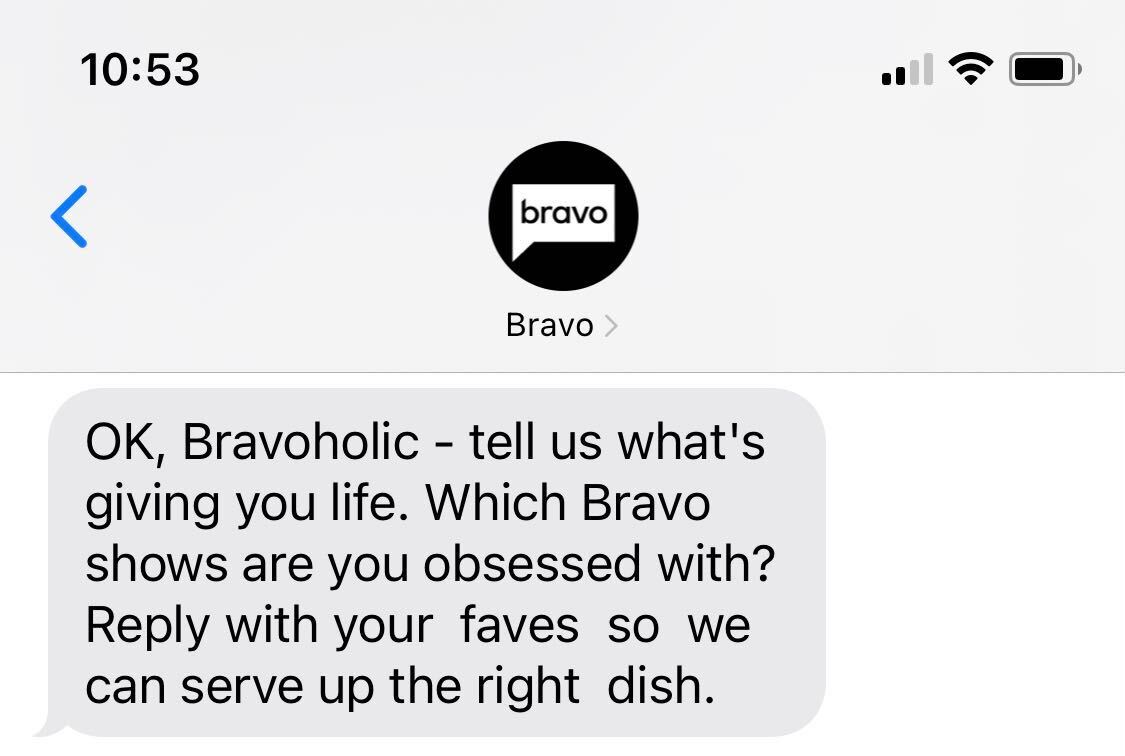
Like we mentioned before, spam texts do exist, so making an impact with SMS messages requires a level of personalization that resonates with the end user. Less competition doesn’t mean brands can rest on their laurels and send generic messages—less competition means more eyeballs. Bravo managed to both customize this message for users while maintaining their brand voice—a surefire way to get customers’ attention, and keep it.
Personalized SMS Messages as Part of a Cross-Channel Experience
You knew it was coming. We had to mention cross-channel marketing before this post ended.
Personalized SMS messaging is an excellent way to provide users with timely, engaging content, but it shouldn’t be the only channel your brand uses.
The most successful marketing programs will take advantage of multiple marketing channels that communicate with one another, resulting in a seamless experience. This involves playing to each channels’ strengths. Now that you know when SMS messaging should be implemented, think about how to complement that messaging with other channels—email, push notifications, direct mail—that serve different purposes.
To learn more about marketing channel capabilities and creating a seamless cross-channel customer experience, schedule an Iterable demo today.